

A COMEX vault run occurs when physical delivery demands exceed available metal supplies in the exchange's registered inventory, potentially forcing cash settlements or delivery delays. With gold registered inventory providing only 43.5% coverage against open interest and silver at 13.9%, understanding this scenario has become crucial for precious metals investors. This analysis examines the mechanical safeguards built into the futures system, historical precedents of delivery stress, and current risk indicators that could signal whether such an event might unfold.
Understanding COMEX Vault Mechanics
The COMEX vault system operates on two inventory categories that determine delivery capability. Registered inventory represents metal warranted for immediate delivery against futures contracts, currently standing at 17.58 million ounces for gold and 92.90 million ounces for silver. Eligible inventory consists of metal meeting COMEX specifications but not warranted for delivery, totaling 16.84 million ounces in gold and 283.54 million ounces in silver.
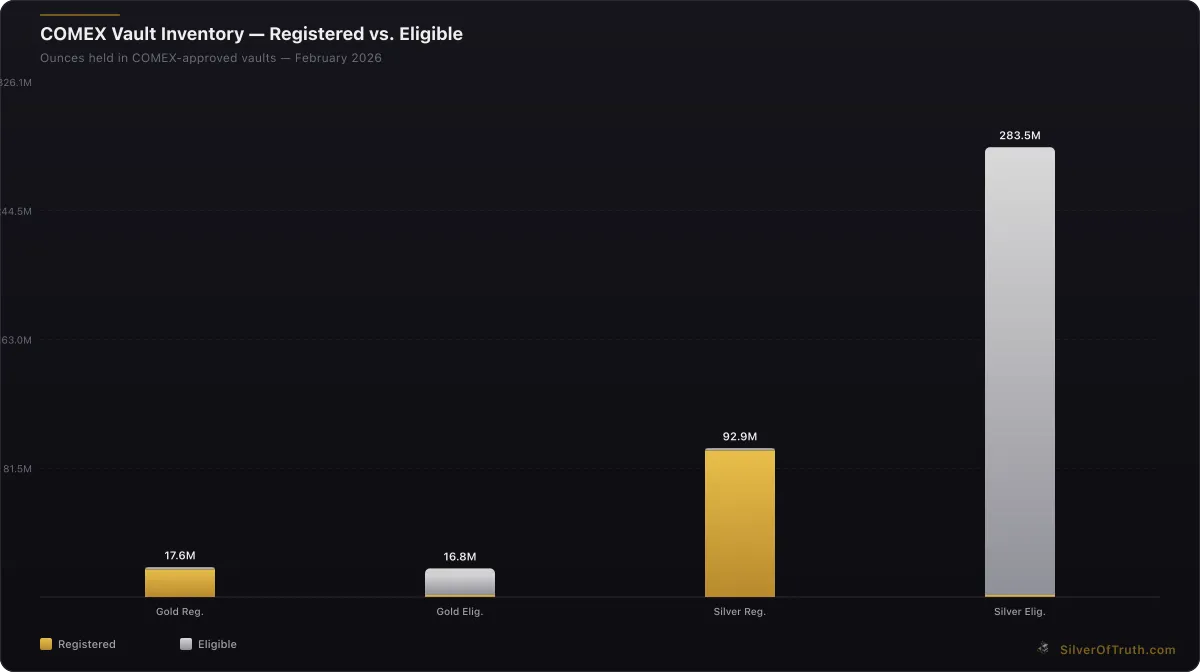
Source: SilverOfTruth COMEX data, February 2026
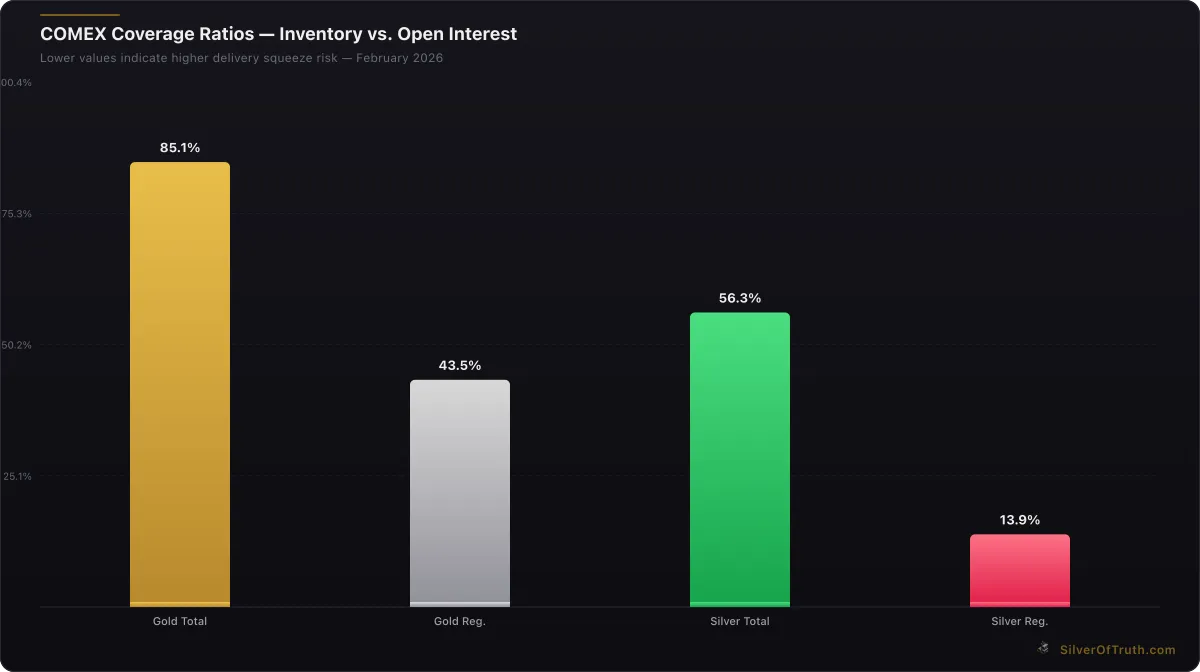
COMEX coverage ratios — lower values indicate higher delivery squeeze risk. Source: SilverOfTruth, February 2026
This distinction proves critical during delivery periods. Only registered metal can satisfy futures contract delivery, making the registered-to-open-interest ratio the primary risk indicator. Current ratios show gold at 43.5% coverage and silver at 13.9% coverage according to CME Group COMEX data, both below historical comfort zones.
The conversion process between eligible and registered inventory provides flexibility but requires warehouse operator action and metal owner consent. During stress periods, this conversion mechanism may not respond quickly enough to satisfy surging delivery demand, creating potential bottlenecks.
Current Risk Assessment Indicators
COMEX inventory data reveals concerning trends across multiple metrics. Gold registered inventory declined 4.76% monthly while open interest remains elevated at 404,391 contracts representing 40.44 million ounces of delivery potential. This creates a coverage ratio significantly below the 60-80% range typically considered safe for market stability.
Silver presents an even more precarious situation with registered coverage at just 13.9% against 133,641 contracts of open interest. The CFTC COT report data shows commercial short positions dominating at 59.5% of open interest, indicating heavy hedging activity that could translate to delivery pressure if producers choose physical settlement over cash.
Monthly delivery statistics provide additional context for vault run risk assessment. February 2026 has seen 35,850 gold delivery notices issued with matching stops, indicating balanced physical demand without acute stress. However, this equilibrium can shift rapidly during market dislocations or liquidity crises when paper holders suddenly demand physical metal.
Historical Precedents and Warning Signs
Previous delivery squeezes offer valuable lessons for identifying vault run conditions. The March 2020 gold futures crisis demonstrated how quickly coverage ratios can deteriorate when eligible-to-registered conversions lag delivery demand. During this episode, gold futures traded at significant premiums to spot prices as physical markets seized up globally.
The 1979-1980 silver crisis provides the most dramatic example of COMEX delivery stress. The Hunt Brothers' accumulation strategy pushed silver futures to extreme backwardation as registered inventory depleted rapidly. COMEX ultimately changed margin requirements and position limits to prevent market breakdown, illustrating the exchange's willingness to modify rules during extreme stress.
More recently, the December 2021 silver delivery month saw unusually high standing for delivery relative to registered inventory, creating temporary supply constraints. Our analysis of COMEX inventory trends shows these episodes typically emerge when coverage ratios fall below 30% while open interest remains elevated.
Delivery Mechanics During Stress Events
COMEX delivery procedures reveal potential bottlenecks that could exacerbate vault run scenarios. The delivery process begins with first notice day when short contract holders announce intention to deliver. Long contract holders then receive delivery notices and must either accept delivery or offset their positions in the futures market.
During normal market conditions, most futures contracts settle financially rather than through physical delivery. However, stress events can dramatically alter this ratio. If even 20-30% of open interest demanded physical settlement, current registered inventory levels would face severe strain, particularly in silver where coverage sits at 13.9%.
The exchange maintains several circuit breakers designed to prevent vault runs, including the ability to declare force majeure, implement cash settlement, or modify delivery terms. These mechanisms protect market integrity but raise questions about the reliability of physical delivery guarantees during extreme scenarios as detailed in our guide to COMEX delivery procedures.
Early Warning System Indicators
Several metrics serve as early warning indicators for potential vault run scenarios. Primary among these is the registered coverage ratio, which should ideally remain above 50% for gold and 30% for silver based on historical analysis. Current levels at 43.5% and 13.9% respectively suggest elevated risk conditions.
Open interest trends provide additional insight into delivery pressure potential. Rising open interest combined with declining registered inventory creates the classic squeeze setup. February 2026 data shows relatively stable open interest at 404,391 gold contracts and 133,641 silver contracts, preventing immediate crisis but maintaining elevated baseline risk.
Basis relationships between futures and spot prices offer real-time stress indicators. Persistent backwardation, where nearby futures trade below spot prices, signals physical supply constraints. Current gold and silver futures maintain slight contango, suggesting adequate near-term supply, though this can change rapidly during market disruptions.
Monthly delivery patterns also reveal stress building. Unusually high delivery notice activity relative to historical norms indicates growing preference for physical settlement. Our delivery squeeze risk analysis tracks these patterns across multiple delivery months to identify emerging trends.
Systemic Risk Factors
Several systemic factors could trigger vault run scenarios beyond normal market mechanics. Geopolitical tensions driving flight-to-quality demand for physical metals represent the primary external risk. Currency crises or banking sector stress could similarly spike physical delivery demand as investors seek alternatives to financial assets.
Regulatory changes affecting precious metals markets pose another systemic risk. New reporting requirements, position limits, or taxation policies could alter market dynamics and participant behavior in ways that stress the delivery system.
The concentration of COMEX vault operations among a limited number of depositories creates operational risk. Disruptions to major vault facilities through natural disasters, labor disputes, or security concerns could rapidly constrain delivery capacity regardless of inventory levels.
Mitigation Strategies and Market Responses
COMEX has developed multiple tools to prevent vault runs while maintaining market integrity. Emergency procedures include the authority to implement cash settlement in lieu of physical delivery, though this option would likely face significant market and legal challenges given the fundamental nature of futures contracts as delivery instruments.
Position limit enforcement provides another tool for preventing excessive concentration that could trigger delivery squeezes. The exchange monitors large trader positions and can require reductions if deemed threatening to orderly market function.
Margin requirement adjustments serve as a primary tool for managing delivery pressure. Higher margins reduce speculative demand and encourage position liquidation rather than delivery, helping balance supply and demand dynamics during stress periods.
Market Structure Implications
The possibility of COMEX vault runs highlights fundamental questions about paper-to-physical conversion ratios in modern precious metals markets. Current market structure allows substantial leverage through futures contracts backed by relatively modest physical inventory, creating inherent vulnerability to delivery stress.
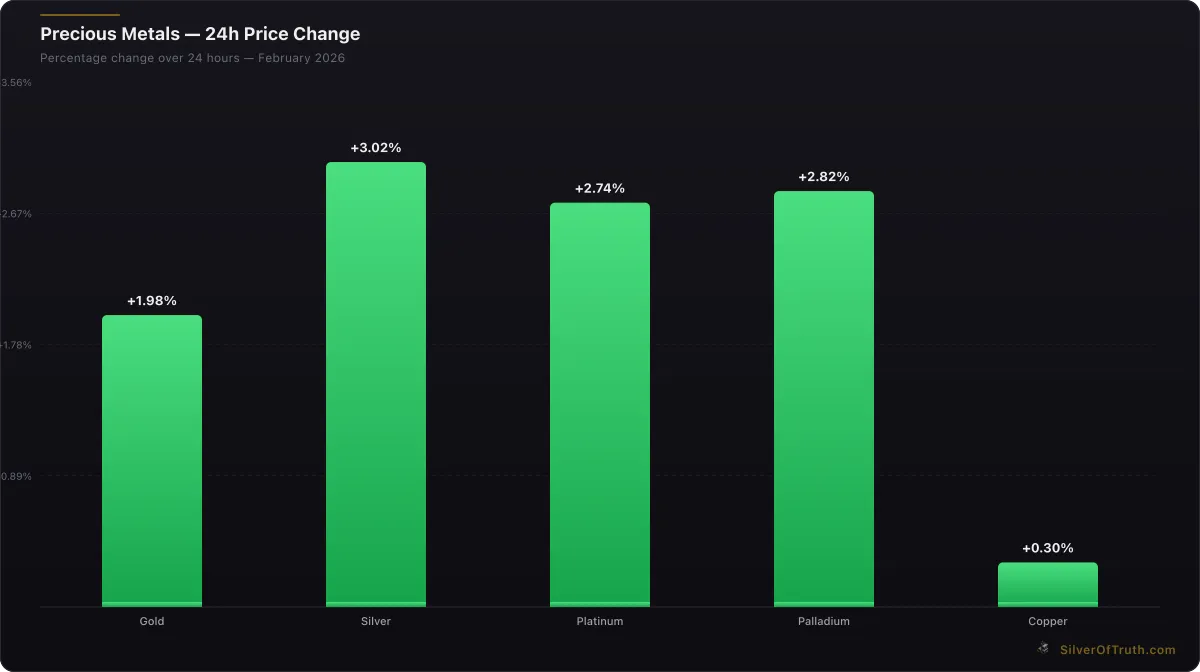
24-hour precious metals price changes. Source: SilverOfTruth, February 2026
Alternative market structures, including fully-backed physical ETFs and allocated storage programs, have gained popularity partly in response to these concerns. These vehicles offer direct physical exposure without relying on futures market delivery mechanisms, though they typically charge higher fees and offer less liquidity than COMEX futures.
The growth of Shanghai Gold Exchange and other physical-only markets reflects global demand for alternatives to paper-based price discovery systems. These platforms require 100% physical backing, eliminating vault run risk but potentially reducing market efficiency and liquidity.
Probability Assessment and Timeline
Current data suggests elevated but not immediate vault run risk for COMEX markets. Gold coverage at 43.5% remains above critical levels seen during historical stress events, though continued inventory depletion at 4.76% monthly rates could reach concerning levels within 3-6 months absent replenishment.
Silver presents higher immediate risk with registered coverage at just 13.9%. Even modest increases in delivery demand could strain available supplies, particularly during active delivery months when standing for delivery typically peaks.
The probability of partial vault run scenarios—where specific delivery months or metals face supply constraints without complete system breakdown—appears higher than full market failure. Such events could drive significant price volatility and basis relationships while highlighting systemic vulnerabilities.
Investment Implications and Positioning
Understanding vault run dynamics helps investors position appropriately for various scenarios. Physical precious metals ownership eliminates counterparty risk associated with paper markets but requires secure storage and typically involves higher transaction costs and wider bid-ask spreads.
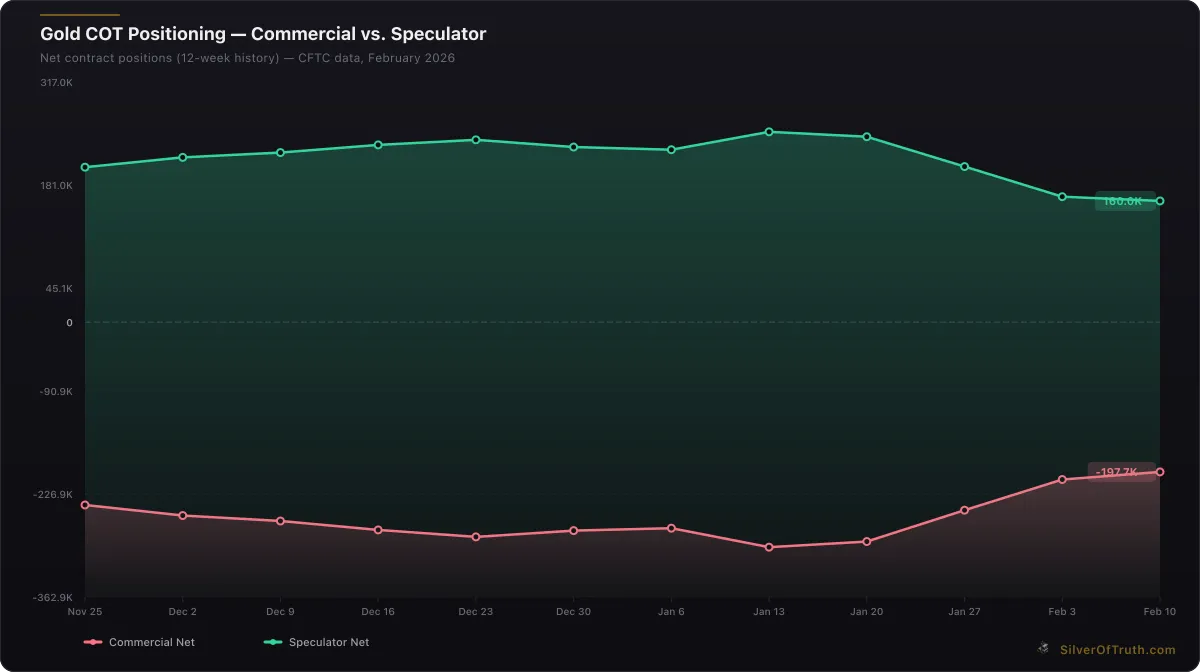
Gold COT positioning: commercial hedgers (red) vs. speculators (green). Source: CFTC via SilverOfTruth, February 2026
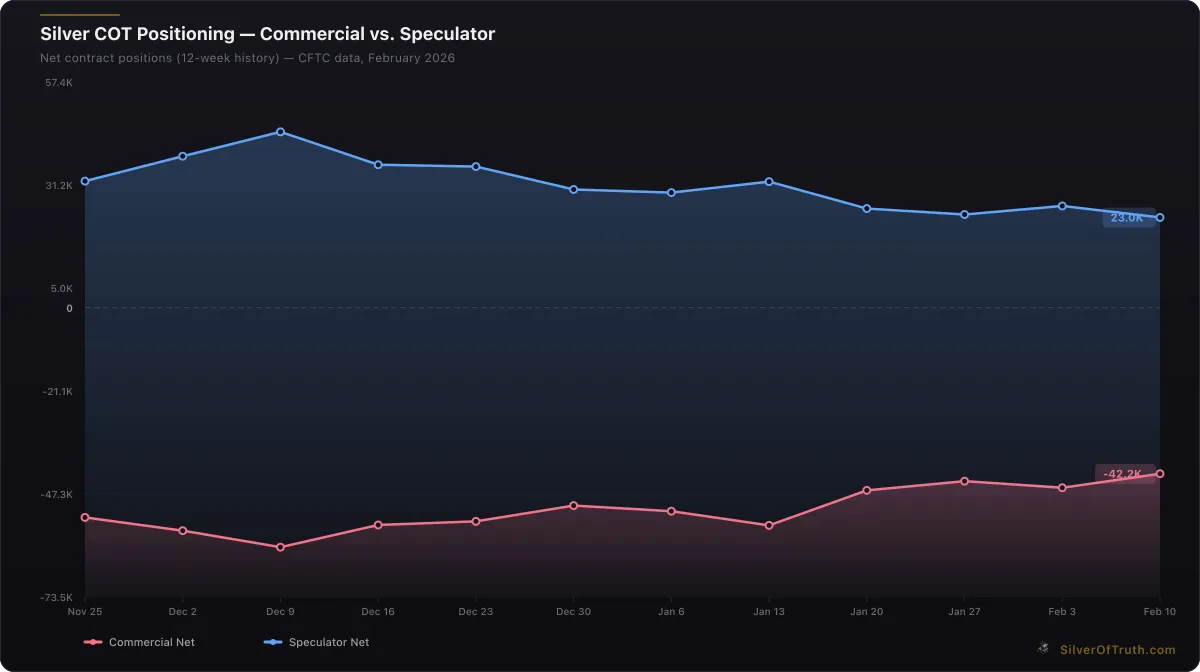
Silver COT positioning: commercial hedgers (red) vs. speculators (blue). Source: CFTC via SilverOfTruth, February 2026
Futures market participants should monitor coverage ratios and delivery patterns closely, particularly when holding positions into delivery months. Our COMEX inventory tracking provides regular updates on these critical metrics.
Mining stock investments offer indirect precious metals exposure with different risk profiles than either physical metals or futures contracts. Major producers typically benefit from higher prices driven by supply constraints, though they face operational and financial risks independent of commodity price movements as outlined in our mining stock evaluation guide.
Frequently Asked Questions
What exactly constitutes a COMEX vault run?
A COMEX vault run occurs when delivery demands exceed available registered inventory capacity, forcing the exchange to either find additional metal supplies, implement cash settlement, or declare force majeure. This differs from normal delivery activity where supply and demand remain balanced.
How quickly could a vault run develop?
Vault runs can develop rapidly during market stress, potentially within days if large position holders simultaneously demand delivery. The March 2020 gold market disruption demonstrated how quickly physical markets can seize up when normal arbitrage mechanisms break down.
What would happen to precious metals prices during a vault run?
Historical precedents suggest significant price volatility with futures potentially trading at substantial premiums to spot prices. The severity depends on whether alternative supply sources can satisfy delivery demand and how quickly the exchange implements emergency procedures.
Can COMEX prevent vault runs through rule changes?
COMEX maintains broad authority to modify contract terms, implement cash settlement, or adjust delivery procedures during extreme market conditions. However, such actions would likely face significant legal challenges and could undermine confidence in futures market delivery guarantees.
How do current risk levels compare to historical precedents?
Current coverage ratios approach levels seen during previous stress events, particularly for silver at 13.9% registered coverage. While not at crisis levels, these metrics warrant close monitoring as they represent elevated baseline risk compared to historical norms.
Disclaimer: This article is for informational and educational purposes only and does not constitute financial, investment, or trading advice. Past performance is not indicative of future results. Always conduct your own research and consult with a qualified financial advisor before making investment decisions. SilverOfTruth provides market data and analysis tools — it does not provide personalized financial advice.