
Understanding COMEX registered vs eligible inventory is crucial for any serious precious metals investor, yet many don't grasp the critical distinction that could impact their trading decisions. These two vault categories represent fundamentally different levels of metal availability for delivery against futures contracts. Registered inventory consists of metal specifically warranted for immediate delivery, while eligible inventory represents metal stored in COMEX warehouses but not yet committed for delivery. Only registered metal can actually satisfy delivery obligations, making it the key metric for assessing market squeeze potential and delivery risk—a distinction that directly affects how you should interpret COMEX inventory data.
COMEX Registered vs Eligible: What's the Difference and Why It Matters
Understanding COMEX registered vs eligible inventory is crucial for any serious precious metals investor. These two vault categories represent different levels of metal availability for delivery, yet many investors don't grasp the critical distinction. With current COMEX silver registered inventory at 92.9 million ounces and eligible stocks at 283.5 million ounces, this difference directly impacts market squeeze potential and delivery risk assessment. For a comprehensive foundation, explore our COMEX Explained hub to understand the broader mechanics.
Quick Answer: Registered inventory consists of metal specifically warranted for immediate delivery against COMEX futures contracts, while eligible inventory represents metal stored in COMEX warehouses but not yet committed for delivery. Only registered metal can satisfy delivery obligations, making it the critical metric for assessing squeeze risk.
What Is COMEX?
The Commodity Exchange (COMEX) serves as the primary global marketplace for precious metals futures trading, operating under CME Group's umbrella. Established in 1933 through a merger of four smaller exchanges, COMEX facilitates price discovery and hedging for gold, silver, platinum, and palladium contracts worth billions of dollars annually.
COMEX's warehouse system stores physical metal across approved depositories in New York, Delaware, and other locations. These facilities hold both privately-owned metal and exchange-certified stocks that back the futures contracts. According to CME Group's official data, the exchange maintains strict standards for bar quality, weight tolerances, and custody procedures.
The exchange operates two parallel systems: the futures trading floor (now largely electronic) where paper contracts change hands, and the physical delivery system where actual metal transfers between warehouse receipt holders. This dual structure creates the dynamic between paper trading volumes and physical inventory levels that drives much of precious metals market analysis.
Understanding COMEX's role requires recognizing its function as both a price-setting mechanism and a physical delivery system. While most futures contracts (over 95%) settle financially rather than through physical delivery, the availability of real metal backing these contracts ensures price convergence between paper and physical markets.
What Is Registered Silver and Gold?
Registered inventory represents precious metal that has been specifically warranted and made available for immediate delivery against COMEX futures contracts. When metal achieves "registered" status, it means the warehouse has issued a warrant (essentially a title document) that can be used to satisfy delivery obligations for expiring futures contracts.
Currently, COMEX holds 92.9 million ounces of registered silver and 17.6 million ounces of registered gold according to the latest warehouse reports. This registered metal sits ready for delivery at any time, requiring no additional paperwork or owner approval for transfer.
The registration process involves several key steps. First, the metal must meet COMEX delivery specifications for purity, weight, and form. Silver must be .999 fine in 1,000-ounce or 1,100-ounce bars, while gold requires .995 fineness in 100-ounce bars. Once quality standards are verified, the warehouse issues a warrant making the metal eligible for delivery.
Registered stocks fluctuate daily as metal moves in and out of warranted status. When a futures contract holder takes delivery, registered inventory decreases. Conversely, when metal owners deposit qualifying bars and request warrants, registered levels increase. This constant flow creates the dynamic inventory levels traders monitor for squeeze signals.
The critical aspect of registered metal is its immediate availability. Unlike eligible inventory, registered stocks require no owner permission or conversion process to satisfy delivery demands. This makes registered levels the true measure of how much metal stands ready to meet futures contract obligations.
What Is Eligible Silver and Gold?
Eligible inventory consists of precious metal stored in COMEX-approved warehouses but not currently warranted for delivery. This metal meets exchange quality standards and sits in approved facilities, yet remains unavailable for immediate delivery against futures contracts until converted to registered status.
COMEX currently holds 283.5 million ounces of eligible silver and 16.8 million ounces of eligible gold. While this represents a substantial portion of total warehouse stocks, eligible metal cannot directly satisfy delivery obligations without first undergoing the registration process.
The eligible category serves multiple purposes within the COMEX system. Private investors and institutions use approved warehouses for secure storage of their precious metals holdings. Mining companies may store production in COMEX facilities while deciding whether to warrant the metal for delivery or sell through other channels. Banks and dealers often maintain eligible inventory as working stock for their precious metals operations.
Converting eligible to registered inventory requires the metal owner's explicit consent. The owner must request warrant issuance from the warehouse, which then changes the metal's status from eligible to registered. This conversion process typically takes 1-2 business days but depends entirely on the owner's willingness to make their metal available for delivery.
Market participants closely monitor the eligible-to-registered conversion rate during periods of delivery stress. In March 2020, silver eligible inventory converted rapidly to registered status as delivery demand spiked, demonstrating how the two categories interact during market squeezes. However, this conversion depends on owner cooperation and cannot be forced by the exchange or futures traders.
What's the Key Difference Between Registered and Eligible?
The fundamental difference lies in immediate availability for delivery. Registered inventory can satisfy futures contract delivery obligations instantly, while eligible inventory requires owner consent and conversion time before becoming deliverable.
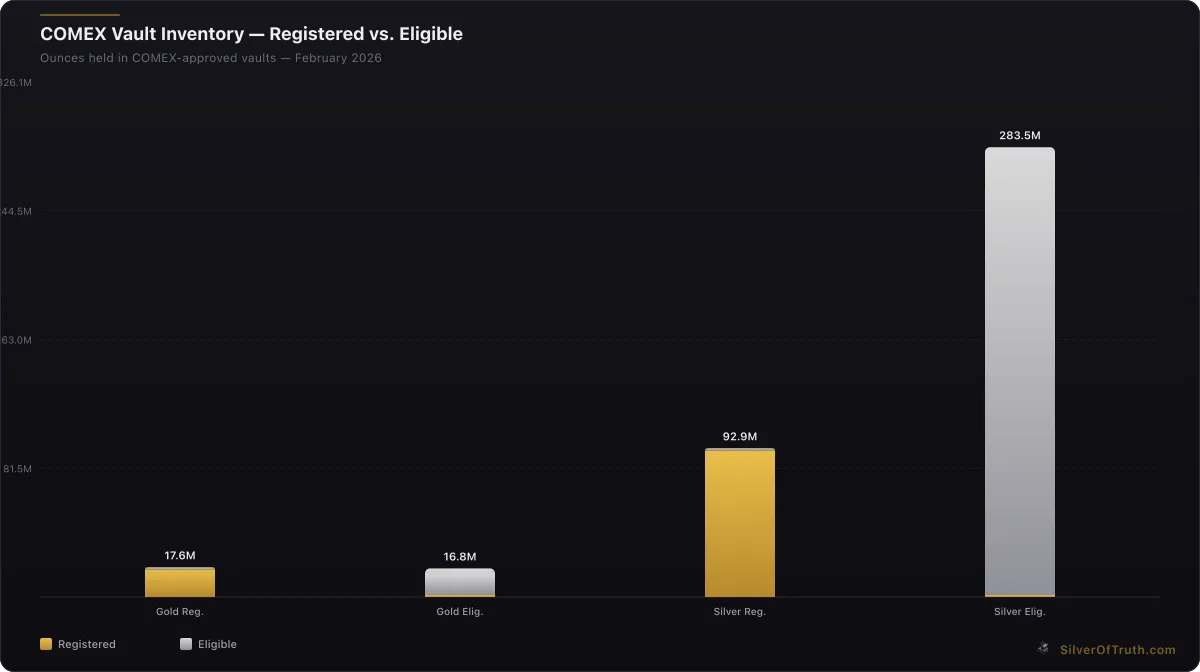
Source: SilverOfTruth COMEX data, February 2026
This distinction creates a two-tiered system within COMEX warehouses. Think of registered metal as inventory on a store shelf ready for immediate purchase, while eligible metal resembles items in a warehouse storage room that need owner approval before reaching the sales floor.
From a delivery mechanics perspective, only registered inventory counts toward coverage ratio calculations. With silver open interest at 143,180 contracts (715.9 million ounces) against 92.9 million ounces of registered inventory, the registered coverage ratio stands at just 13.0%. This compares to a total coverage ratio of 52.6% when including eligible stocks.
The speed difference matters crucially during delivery stress periods. Registered metal transfers immediately upon delivery notice, while eligible conversions require coordination between the requesting party, metal owner, and warehouse operator. During the March 2020 delivery squeeze, this timing difference created significant market volatility as traders questioned whether eligible metal would convert quickly enough to meet delivery demands.
Legal ownership also differs between the categories. Registered metal belongs to warrant holders who can transfer ownership instantly through warrant assignment. Eligible metal belongs to specific individuals or entities who must explicitly authorize any status changes. This ownership structure explains why eligible inventory cannot automatically become registered during delivery crunches.
The pricing implications extend beyond simple availability. Registered inventory directly impacts futures contract pricing through delivery arbitrage mechanisms, while eligible metal influences pricing only through its potential conversion to registered status. Market makers and arbitrageurs focus primarily on registered levels when assessing squeeze risk and adjusting basis relationships between futures and physical prices.
Why Does Registered Matter More Than Eligible?
Registered inventory serves as the ultimate backstop for futures contract integrity. When delivery month arrives, only registered metal can satisfy contract obligations without additional complications or delays. This makes registered levels the primary metric for assessing delivery squeeze risk and market stability.
The current silver registered coverage ratio of 13.0% indicates potential stress if significant delivery demand emerges. Historical analysis shows that registered coverage below 20% often coincides with increased delivery activity and price volatility. The March 2020 silver squeeze began when registered coverage fell to similar levels, triggering a rush to convert eligible inventory.
Market participants use registered levels to gauge supply tightness because this metal represents the exchange's readily available buffer. Large speculative positions or unexpected industrial demand can quickly absorb registered inventory, creating squeeze conditions that force either eligible conversion or cash settlement of contracts.
The conversion process from eligible to registered creates additional risk layers during market stress. Eligible metal owners may demand premiums for warrant issuance, delay conversions for strategic reasons, or simply refuse to participate in the delivery process. These factors make eligible inventory an unreliable source of immediate supply during critical periods.
From a price discovery standpoint, registered inventory directly influences basis relationships between futures and physical markets. Low registered levels relative to open interest create "backwardation" conditions where near-month futures trade at premiums to deferred contracts, signaling physical supply tightness.
Professional traders structure their delivery strategies around registered inventory availability. Large investment banks and commodity trading houses monitor registered levels closely when establishing futures positions, calculating delivery costs, and managing physical inventory risk. For detailed analysis of these market dynamics, review our comprehensive COMEX inventory guide.
How Do Warehouse Movements Affect Inventory Levels?
Daily warehouse movements create the constant flux in registered and eligible inventory levels that market participants monitor for trend signals. These movements result from various activities including delivery settlements, new deposits, warrant registrations, and strategic repositioning by large holders.
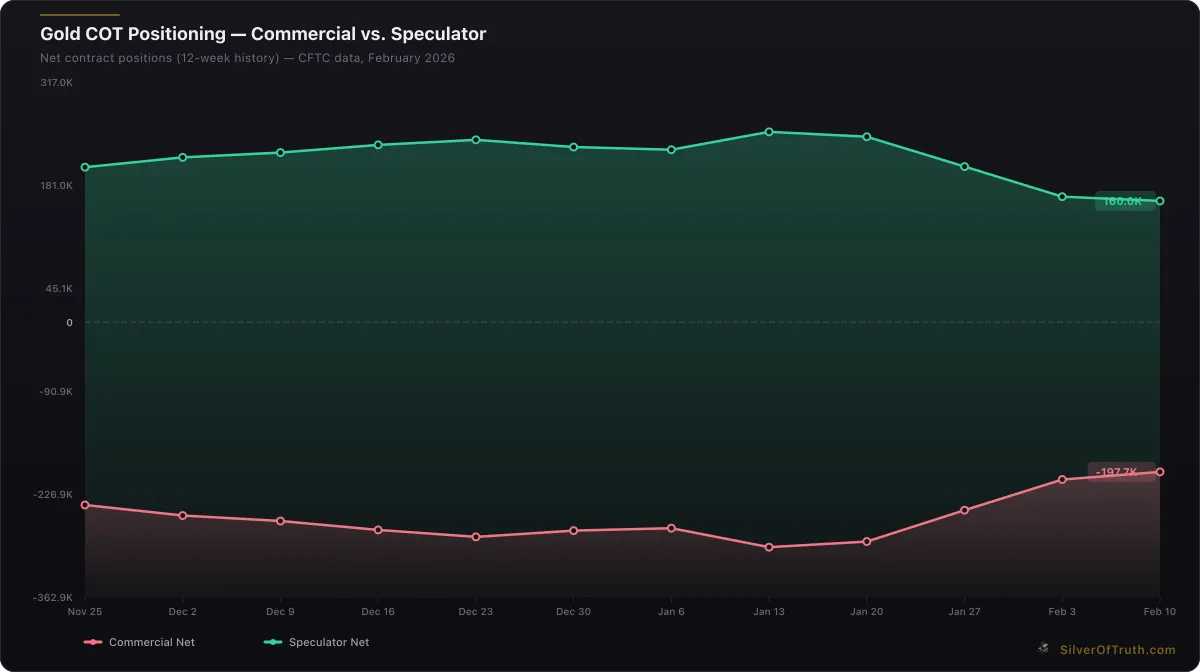
Gold COT positioning: commercial hedgers (red) vs. speculators (green). Source: CFTC via SilverOfTruth, February 2026
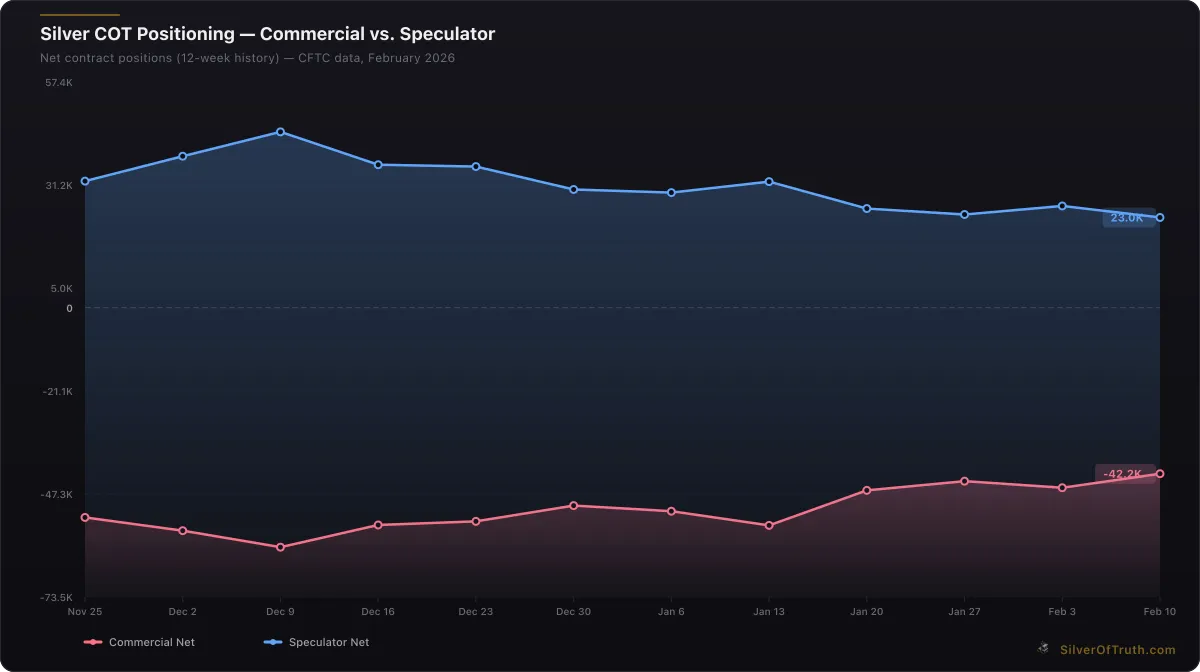
Silver COT positioning: commercial hedgers (red) vs. speculators (blue). Source: CFTC via SilverOfTruth, February 2026
Delivery-related movements typically occur during contract expiration periods when futures holders either take delivery (reducing registered inventory) or settle financially. Non-delivery movements happen year-round as metal owners adjust their storage strategies, convert between registered and eligible status, or move metal between different warehouse locations.
The timing of warehouse movements often provides market intelligence about large player intentions. Significant registered inventory increases during non-delivery months may indicate preparation for future squeeze scenarios, while large withdrawals could signal profit-taking or strategy shifts by major holders.
Seasonal patterns emerge in warehouse activity aligned with industrial demand cycles and contract expiration schedules. Silver inventory often shows increased activity during Q4 as industrial users prepare for next-year production, while gold movements frequently correlate with jewelry demand cycles and central bank activity.
Geographic distribution of warehouse stocks adds another layer of analysis. COMEX maintains approved depositories in multiple locations, and metal movements between facilities can signal changing demand patterns or logistical considerations. Track these movements in real-time with our COMEX Inventory Tracker.
Understanding Coverage Ratios and Squeeze Risk
Coverage ratios measure the relationship between available inventory and outstanding futures obligations, serving as early warning indicators for potential delivery squeezes. The registered coverage ratio (registered inventory ÷ open interest) provides the most accurate squeeze risk assessment since only registered metal can immediately satisfy delivery demands.
Current COMEX silver shows a registered coverage ratio of 13.0%, calculated from 92.9 million ounces registered inventory against 715.9 million ounces of open interest. This level falls into the "high risk" category based on historical squeeze thresholds. Gold's registered coverage of 42.9% indicates a more comfortable supply situation.
Historical analysis reveals that registered coverage below 15% often triggers increased delivery activity and price volatility. The famous silver squeeze of March 2020 began when registered coverage fell to 12%, forcing massive eligible-to-registered conversions and creating significant market disruption.
The total coverage ratio (including eligible inventory) provides context for potential supply availability but overstates actual delivery capacity since eligible conversion depends on owner cooperation. Silver's total coverage of 52.6% appears comfortable until considering that most eligible metal may not convert during squeeze conditions.
Market participants use coverage ratios to structure trading strategies and risk management approaches. Low coverage ratios often trigger basis widening, increased delivery premiums, and greater volatility in near-month futures contracts. Understanding these relationships helps investors navigate periods of potential supply stress.
What Happens During a COMEX Delivery Squeeze?
A COMEX delivery squeeze develops when futures contract holders demand more physical metal than registered inventory can immediately supply. This creates a scramble for available metal, driving up prices and forcing rapid market adjustments across the entire precious metals complex.
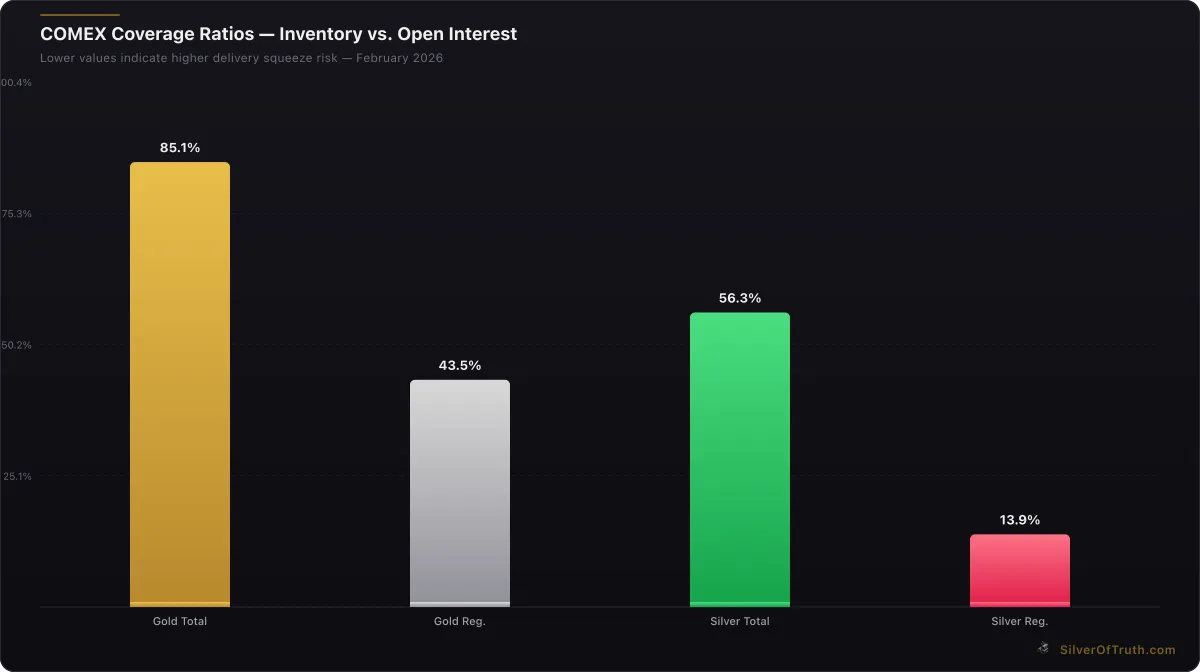
COMEX coverage ratios — lower values indicate higher delivery squeeze risk. Source: SilverOfTruth, February 2026
The squeeze process typically unfolds in predictable stages. First, registered inventory coverage drops below critical thresholds as delivery notices exceed normal levels. Next, eligible inventory owners face requests to convert their metal to registered status, often at premium prices. Finally, if sufficient eligible conversion doesn't occur, some futures holders must settle financially rather than take delivery.
During the March 2020 silver squeeze, registered inventory fell from over 120 million ounces to just 40 million ounces in six weeks. This drew down forced massive eligible-to-registered conversions as the exchange worked to maintain delivery integrity. Spot premiums spiked above $8 per ounce as physical supply tightened dramatically.
The exchange has several mechanisms to manage squeeze conditions including adjusted margin requirements, position limits, and emergency procedures for additional inventory sourcing. However, these tools have limitations when physical supply genuinely runs short relative to delivery demand.
Modern squeeze scenarios differ from historical episodes due to increased retail investor participation and social media coordination. The 2021 "silver squeeze" campaign demonstrated how coordinated buying pressure can strain the traditional delivery system even without fundamental supply shortages.
For more detailed coverage of potential squeeze scenarios, see our analysis of COMEX vault run risks and current delivery squeeze risk assessment.
How to Track COMEX Inventory in Real-Time
Monitoring COMEX inventory requires accessing multiple data sources and understanding the reporting schedule that governs official warehouse updates. The exchange publishes warehouse stock reports daily at approximately 1:00 PM EST, providing the previous day's closing inventory levels for all precious metals.
Official COMEX data comes through CME Group's metals market data, which provides detailed breakdowns by metal, warehouse, and registered/eligible status. This data includes daily changes, weekly trends, and monthly comparisons that help identify significant pattern shifts.
Professional traders supplement official data with proprietary analysis tools that track inventory velocity, conversion rates, and correlations with price movements. These systems often incorporate additional data feeds including Shanghai Gold Exchange inventory, LBMA vault holdings, and ETF redemption activity.
Understanding data timing is crucial for effective inventory monitoring. Warehouse reports reflect the previous business day's closing positions, meaning real-time inventory levels may differ from published figures. Delivery notices and warrant transfers can create same-day inventory changes that won't appear until the next reporting period.
The SilverOfTruth app consolidates multiple inventory data sources into a single comprehensive view, including COMEX registered and eligible levels, coverage ratio calculations, delivery activity tracking, and historical trend analysis. Monitor live inventory data and receive alerts for significant changes with our COMEX Inventory Tracker.
Inventory Data Analysis and Market Implications
Interpreting COMEX inventory data requires understanding the broader context of precious metals market dynamics and the various factors that influence warehouse stock levels. Raw inventory numbers gain meaning only when analyzed against historical patterns, seasonal trends, and concurrent market developments.
Trend analysis over multiple time horizons reveals different aspects of market conditions. Daily changes often reflect delivery-related activity and short-term positioning moves, while weekly and monthly trends indicate longer-term supply and demand imbalances. Seasonal patterns help distinguish normal cyclical movements from potentially significant structural shifts.
The relationship between inventory levels and price movements provides valuable trading intelligence. Falling registered inventory combined with rising open interest often presages upward price pressure, while increasing inventory during price rallies may signal profit-taking and potential correction risks.
Cross-metal analysis enhances inventory interpretation by revealing relative strength patterns between gold and silver markets. Diverging inventory trends between metals can indicate shifting industrial demand, investment preferences, or supply chain disruptions affecting specific markets differently.
Market microstructure effects become apparent through detailed inventory analysis. The identity and behavior patterns of large warehouse holders influence conversion rates, delivery timing, and overall supply elasticity during stress periods. Understanding these dynamics helps predict how inventory changes might affect future price action.
Comparing COMEX to Other Global Precious Metals Markets
COMEX operates within a global precious metals ecosystem that includes the London Bullion Market Association (LBMA), Shanghai Gold Exchange (SGE), and various other regional exchanges. Understanding how COMEX inventory relates to global supply helps provide proper context for delivery squeeze risk assessment.
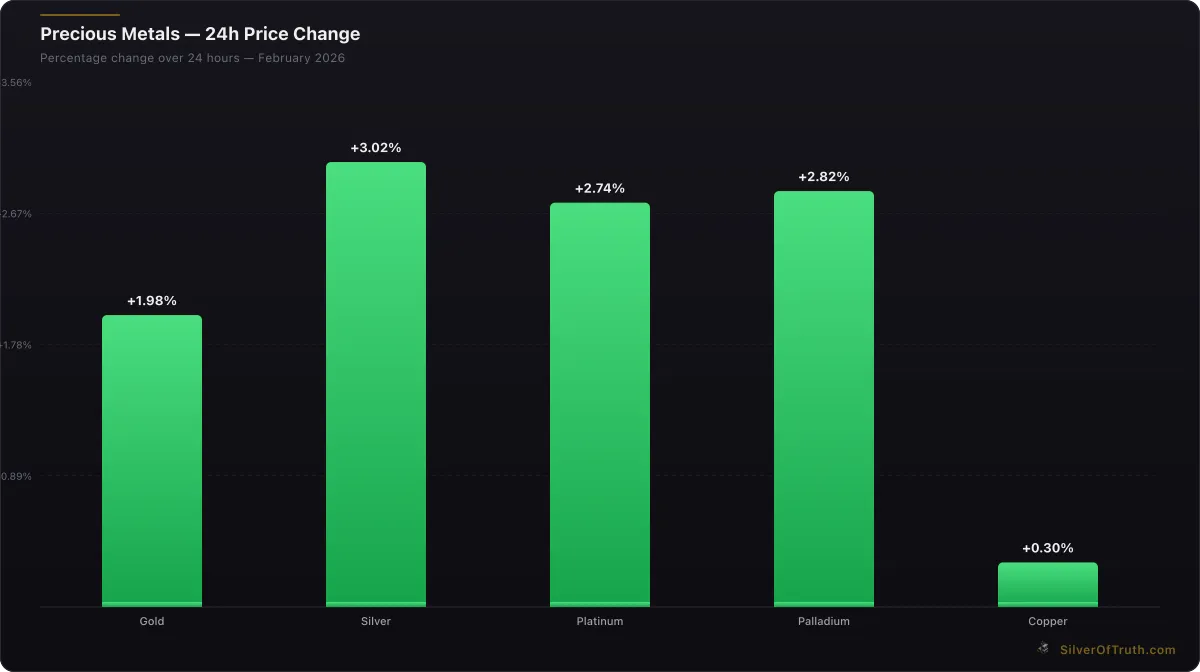
24-hour precious metals price changes. Source: SilverOfTruth, February 2026
The LBMA vaults in London hold significantly more gold inventory than COMEX, with approximately 700 million ounces compared to COMEX's 34.4 million ounces total. However, LBMA operates as an over-the-counter market without the standardized futures delivery system that makes COMEX inventory immediately relevant for contract settlements.
Shanghai Gold Exchange represents the world's largest physical gold trading venue by volume, processing over 2,000 tonnes annually. SGE operates a different delivery model where all trades must settle with physical metal, creating different supply dynamics compared to COMEX's financially-settled futures market.
Arbitrage relationships between these markets create interconnections that affect COMEX inventory flows. Significant premiums in Shanghai or London can draw metal away from COMEX warehouses, while COMEX delivery squeezes can reverse these flows as traders seek available supply.
The global nature of precious metals markets means that COMEX inventory analysis must consider international factors including currency fluctuations, trade policies, shipping costs, and geopolitical developments that affect metal flows between regions.
FAQ
What percentage of COMEX inventory is typically registered vs eligible?
The registered vs eligible ratio varies by metal and market conditions, but silver typically shows 20-30% registered and 70-80% eligible during normal periods. Gold often maintains a more balanced 45-55% registered ratio. Current levels show silver at 25% registered and gold at 51% registered, indicating relatively normal distributions.
Can eligible inventory be converted to registered quickly during a squeeze?
Conversion from eligible to registered typically takes 1-2 business days for the paperwork, but the real constraint is owner willingness to warrant their metal. During squeeze conditions, eligible owners may demand premiums, delay conversions strategically, or simply refuse to participate, making conversion uncertain despite technical feasibility.
How often does COMEX update inventory data?
COMEX publishes official warehouse stock reports daily at approximately 1:00 PM EST, showing the previous business day's closing inventory levels. This includes registered and eligible breakdowns by metal and warehouse location. Some third-party data providers offer more frequent updates based on intraday warehouse activity.
What happens if COMEX runs out of registered inventory?
Complete depletion of registered inventory would force financial settlement of delivery-seeking contracts at potentially significant premiums to futures prices. The exchange has emergency procedures including sourcing additional inventory from eligible stocks, other exchanges, or approved suppliers, but such scenarios would likely create substantial market disruption.
How do I know if current inventory levels signal a squeeze risk?
Monitor the registered coverage ratio (registered inventory ÷ open interest). Ratios below 20% historically indicate elevated squeeze risk, while levels below 15% often trigger actual delivery stress. Combine this with trend analysis, delivery notice activity, and eligible conversion rates for comprehensive squeeze risk assessment.
Sources
- CME Group COMEX Markets Data
- CFTC Commitments of Traders Reports
- London Bullion Market Association
- Shanghai Gold Exchange
- Silver Institute Supply and Demand Reports
- World Gold Council Market Intelligence
Understanding the distinction between COMEX registered and eligible inventory is essential for any serious precious metals investor. While eligible inventory represents stored metal, only registered inventory can immediately satisfy delivery obligations, making it the critical metric for squeeze risk assessment. With current silver registered coverage at just 13.0%, monitoring these levels becomes increasingly important for market participants.
The dynamic relationship between these inventory categories, combined with futures positioning and delivery activity, creates the complex market mechanics that drive precious metals price discovery. By tracking real-time inventory data and understanding the conversion process, investors can better navigate the opportunities and risks within the COMEX system.
For comprehensive precious metals market intelligence including live inventory tracking, coverage ratio alerts, and delivery analysis, explore the SilverOfTruth app on the App Store. Continue building your COMEX expertise through our COMEX Explained learning hub, which covers all aspects of this critical market infrastructure.
Disclaimer: This article is for informational and educational purposes only and does not constitute financial, investment, or trading advice. Past performance is not indicative of future results. Always conduct your own research and consult with a qualified financial advisor before making investment decisions. SilverOfTruth provides market data and analysis tools — it does not provide personalized financial advice.