
COMEX silver inventory has declined by 0.74% this week to 376.4 million ounces, while industrial demand for electronics continues accelerating across 5G infrastructure, electric vehicles, and renewable energy systems. This convergence of shrinking physical supply and expanding technological applications creates compelling dynamics for silver investors tracking structural demand shifts. Our comprehensive analysis reveals how electronics sector consumption patterns are reshaping precious metals markets while inventory pressures mount at critical delivery points.
Understanding these industrial demand fundamentals becomes crucial for investors monitoring silver's evolving supply-demand balance. For foundational context on silver's industrial applications, explore our Silver Supply Deficit hub which covers the broader structural dynamics driving current market conditions.
Quick Answer: Industrial silver demand in electronics is accelerating rapidly due to 5G rollouts, electric vehicle production, and solar panel manufacturing, while COMEX inventory drops to 376.4M oz create supply constraints that could amplify price volatility as technological adoption expands globally.
What Drives Industrial Silver Demand in Electronics?
Silver's unique properties make it irreplaceable in modern electronics applications. The metal offers the highest electrical conductivity of any element, superior thermal conductivity, and exceptional corrosion resistance—characteristics essential for reliable performance in sophisticated electronic systems.
The electronics sector consumes approximately 260-280 million ounces of silver annually according to the Silver Institute, representing roughly 30% of total industrial demand. This consumption spans multiple categories including photovoltaic cells, electrical contacts and conductors, circuit boards, RFID chips, and electromagnetic interference shielding.
Recent technological advances have intensified silver consumption patterns. 5G infrastructure deployment requires significantly more silver per installation compared to 4G networks due to increased antenna density and higher-frequency signal requirements. Electric vehicle production incorporates 25-50 ounces of silver per vehicle depending on configuration, nearly double traditional internal combustion engines.
Solar panel manufacturing represents the fastest-growing electronics demand segment, consuming 140+ million ounces annually as global renewable energy adoption accelerates. Each solar panel requires approximately 0.65-0.75 ounces of silver for electrical connections and conductors, with efficiency improvements driving even higher silver content in next-generation panels.
Current COMEX inventory at 376.4 million ounces represents less than 1.5 years of electronics demand at current consumption rates, highlighting potential supply constraints if industrial demand continues expanding while mining production remains relatively stable.
How Are 5G Networks Transforming Silver Consumption?
Fifth-generation wireless networks consume substantially more silver per installation compared to previous mobile technologies. 5G base stations require specialized antenna arrays operating at higher frequencies (24-100 GHz range), demanding superior conductivity that only silver can provide reliably.
Industry analysis indicates each 5G cell tower requires 3-5 times more silver content than comparable 4G installations. The shift from macro cell towers to dense small cell networks further amplifies consumption, as 5G coverage requires significantly more transmission points to maintain signal strength at higher frequencies.
Global 5G infrastructure investment reached $19.1 billion in 2025 according to telecommunications industry reports, with deployment schedules accelerating across major economies. China leads installations with over 2.3 million 5G base stations operational, while the United States and European Union pursue aggressive rollout timelines through 2028.
Conservative estimates suggest 5G infrastructure will consume an additional 30-40 million ounces of silver annually by 2027 compared to 2024 baseline levels. This incremental demand occurs against backdrop of constrained mining supply, with global silver mine production increasing only 2-3% annually in recent years.
The permanent nature of 5G silver consumption contrasts with investment demand, which can reverse during market corrections. Once deployed in infrastructure, silver remains locked in applications for 10-15 year equipment lifecycles, creating sustained industrial demand floors that support long-term price stability.
Current COMEX registered inventory of 92.9 million ounces provides limited buffer against accelerating 5G deployment schedules, particularly if other industrial applications simultaneously expand consumption patterns.
What Role Does Electric Vehicle Production Play?
Electric vehicle manufacturing has emerged as a significant silver demand driver, with each EV containing 25-50 ounces depending on battery configuration and autonomous driving capabilities. This consumption rate substantially exceeds traditional internal combustion vehicles, which typically use 15-20 ounces primarily for electrical systems and catalytic converters.
Global EV sales reached 14.1 million units in 2025 according to automotive industry data, representing 18% of total vehicle production. Leading manufacturers including Tesla, BYD, and Volkswagen have committed to aggressive electrification timelines, with many targeting 100% electric lineups by 2035-2040.
Silver consumption in EVs spans multiple applications including battery management systems, charging infrastructure, power electronics, and advanced driver assistance systems (ADAS). High-performance EVs with autonomous capabilities can contain 75-100 ounces of silver due to extensive sensor arrays and computing systems.
Charging infrastructure deployment amplifies silver demand beyond vehicle production. Each DC fast-charging station requires 5-10 ounces of silver for power electronics and conductors, with global charging networks expanding rapidly to support EV adoption. The Biden Administration's infrastructure plan alone targets 500,000 public charging stations by 2030.
Battery technology evolution may increase silver consumption per vehicle. Next-generation solid-state batteries under development by major manufacturers require more sophisticated thermal management and electrical systems, potentially driving silver content higher in premium EV segments.
Conservative projections suggest EV-related silver demand could reach 80-100 million ounces annually by 2030, assuming continued adoption growth and technology advancement. This incremental demand must compete with existing industrial applications and investment buying for available supply.
How Do Solar Panels Impact Silver Supply Dynamics?
Photovoltaic solar panels represent the largest single industrial silver application, consuming approximately 140-150 million ounces annually according to renewable energy industry analysis. Each standard residential solar panel requires 0.65-0.75 ounces of silver for electrical connections and anti-reflective coatings.
Global solar capacity installations reached 191 gigawatts in 2025, with China accounting for nearly 50% of new deployments. The International Energy Agency projects solar capacity must triple by 2030 to meet climate targets, implying substantial acceleration in panel production and associated silver consumption.
Technological improvements in panel efficiency paradoxically increase silver intensity. High-efficiency panels achieving 22-24% conversion rates require more silver per unit area for finer electrical grid patterns and improved light capture. Premium residential panels can contain 0.8-1.0 ounces of silver compared to 0.5-0.6 ounces in older designs.
Manufacturing concentration in Asia creates geographic supply chain risks for silver procurement. Over 70% of global solar panel production occurs in China, Malaysia, and Vietnam, requiring substantial silver imports to support manufacturing operations. Trade tensions or logistics disruptions could amplify silver price volatility.
Silver thrifting efforts by panel manufacturers face technological limitations. While research continues into silver substitutes and reduced consumption techniques, current alternatives sacrifice efficiency or reliability—critical factors in 25-year solar panel warranties. Most manufacturers prioritize performance over material cost optimization.
The permanent nature of solar panel silver consumption provides demand stability during economic downturns. Once installed, solar panels operate for 25-30 years without silver recovery, creating sustained demand floors unlike cyclical industrial applications.
What Are the Supply Constraint Implications?
Current COMEX silver inventory levels reveal emerging supply constraints that could amplify price volatility as industrial demand expands. Total inventory of 376.4 million ounces has declined 0.74% this week, while registered stocks available for delivery sit at just 92.9 million ounces.
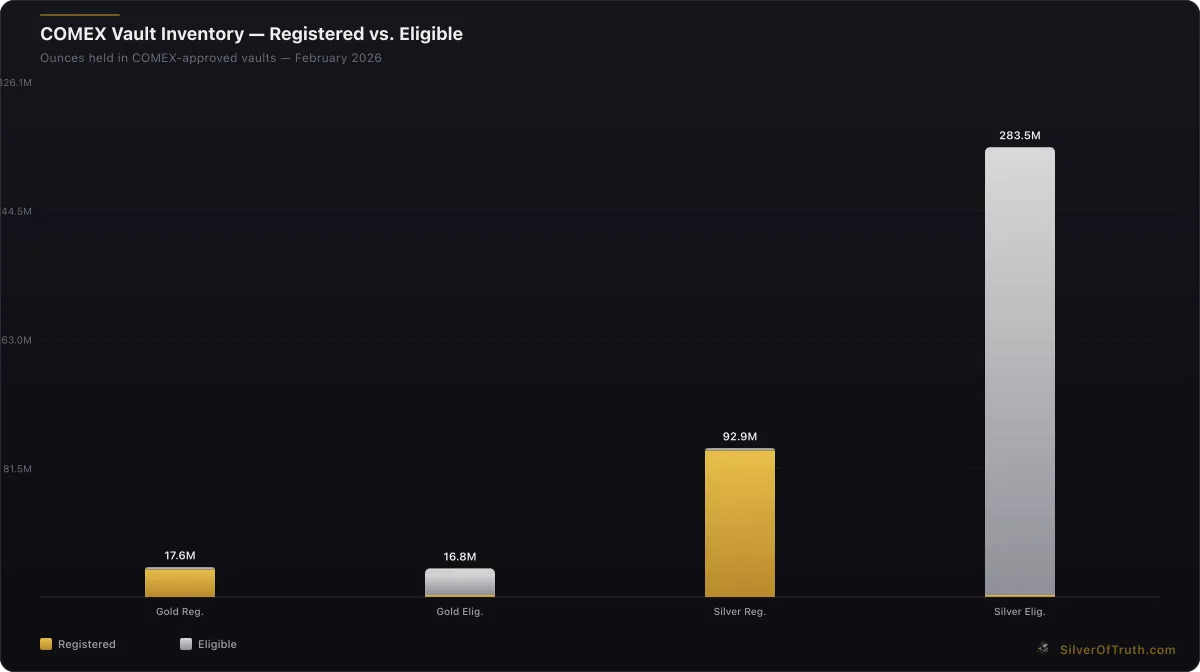
Source: SilverOfTruth COMEX data, February 2026
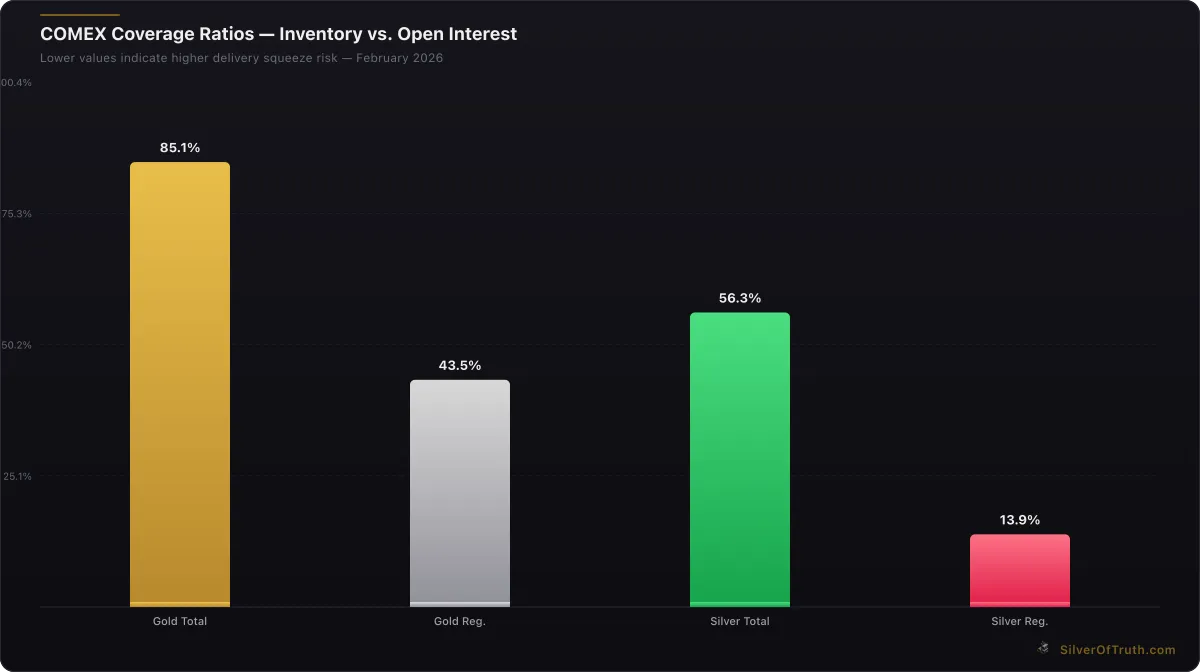
COMEX coverage ratios — lower values indicate higher delivery squeeze risk. Source: SilverOfTruth, February 2026
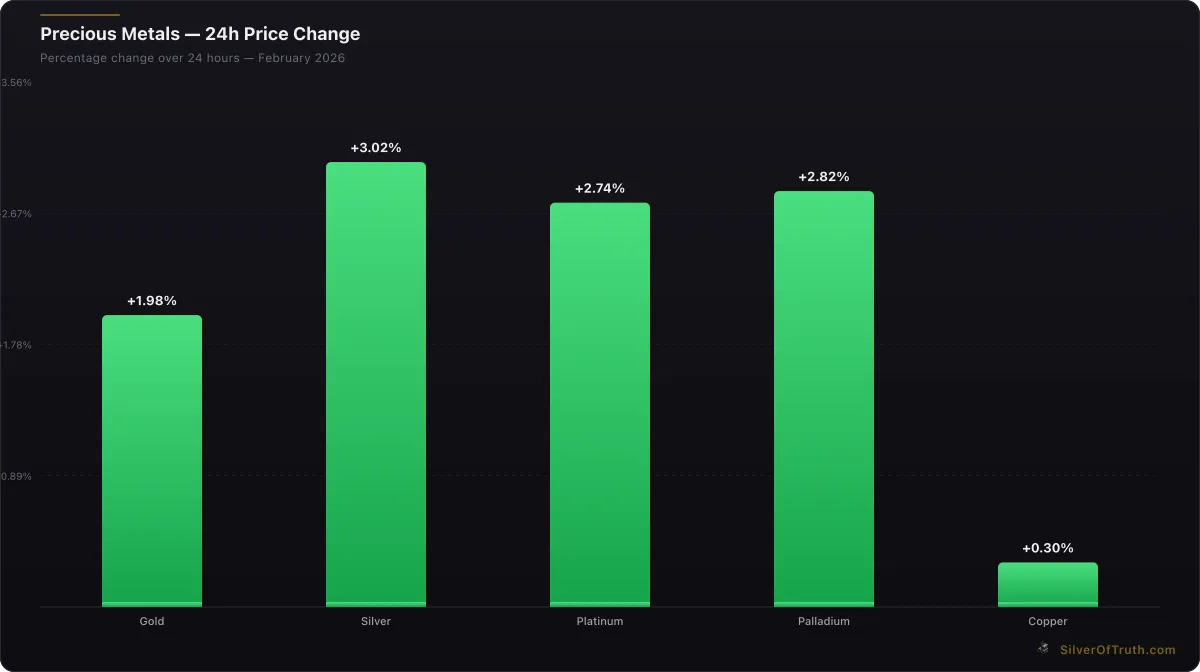
24-hour precious metals price changes. Source: SilverOfTruth, February 2026
The coverage ratio of 52.58% indicates potential delivery stress if industrial buyers increasingly source silver through futures markets rather than bilateral contracts. High-risk classification reflects open interest of 715.9 million ounces against total inventory, creating leverage ratios that historically correlate with price volatility spikes.
Global mine production constraints limit supply elasticity despite rising industrial demand. Major silver-producing regions including Mexico, Peru, and China face operational challenges from labor disputes, environmental regulations, and ore grade declines. Primary silver mines account for only 30% of production, with 70% coming as byproducts from base metal operations.
Industrial silver demand exhibits limited price elasticity due to the metal's small cost component in finished electronics products. Silver represents less than 1-2% of total smartphone or solar panel production costs, making manufacturers relatively insensitive to price changes within normal trading ranges.
Secondary silver recovery from electronic waste provides some supply offset but faces processing constraints and regulatory hurdles. Electronic recycling facilities can recover 85-95% of silver content from properly processed devices, but collection rates remain low globally with most electronic waste exported to developing countries.
Investment demand volatility could compound industrial supply constraints during periods of monetary uncertainty. Silver's dual role as industrial input and monetary asset creates competing demand sources that can drive prices beyond levels justified by industrial fundamentals alone.
Track these developing supply dynamics with our COMEX Inventory Tracker, which provides real-time monitoring of vault levels and delivery activity across precious metals markets.
How Should Investors Position for Industrial Demand Growth?
Industrial silver demand growth creates compelling investment opportunities through multiple channels as technological adoption accelerates and supply constraints tighten. Understanding optimal positioning strategies requires analyzing both direct silver exposure and leveraged plays through mining equities.
Physical silver investment provides pure exposure to industrial demand dynamics without operational risks associated with mining companies. American Silver Eagles, Canadian Maple Leafs, and 1000-ounce bars offer liquidity and storage options for different portfolio sizes. Current premiums over spot range from 8-12% for coins and 3-5% for larger bars.
Silver ETFs including SLV and SIVR offer convenient exposure but face potential supply constraints if COMEX inventory depletion continues. These funds rely on physical backing through warehouse receipts that could become scarce during delivery stress periods. However, ETFs provide superior liquidity for tactical allocation changes.
Mining stock exposure amplifies silver price movements but introduces operational and jurisdictional risks. Primary silver miners including First Majestic Silver, Pan American Silver, and Hecla Mining offer direct leverage to silver prices with production profiles aligned to industrial demand growth.
Technology-focused mining investments target companies with exposure to specific industrial applications. Miners with operations near electronics manufacturing hubs or renewable energy installations may benefit from localized supply agreements and reduced transportation costs.
Industrial metal baskets provide diversified exposure to electronics demand trends beyond silver alone. Copper, palladium, and rare earth elements also benefit from 5G, EV, and renewable energy adoption, potentially reducing portfolio concentration risks.
Options strategies can capture volatility premiums while maintaining exposure to industrial demand catalysts. Long straddles or strangles benefit from price movement in either direction as supply constraints and demand growth create periodic volatility spikes.
Conservative allocation models suggest 5-15% precious metals exposure within diversified portfolios, with industrial demand themes supporting higher allocations for growth-oriented investors. Dollar-cost averaging approaches help smooth entry timing as industrial demand trends develop over multi-year timeframes.
What Are the Key Risk Factors to Monitor?
Industrial silver demand faces several risk factors that could disrupt current growth trajectories and impact investment returns. Technology substitution represents the primary long-term threat as manufacturers continuously research lower-cost alternatives to silver in electronic applications.
Copper and aluminum substitution efforts focus on applications where conductivity requirements allow performance trade-offs. While neither metal matches silver's electrical properties, cost savings of 60-80% incentivize ongoing research and development. However, reliability requirements in critical applications limit substitution potential.
Economic recession risks could temporarily reduce electronics production and delay 5G infrastructure deployments. Consumer discretionary spending cuts typically impact smartphone and electric vehicle sales first, reducing industrial silver consumption. However, infrastructure spending often receives government support during downturns.
Geopolitical tensions affecting electronics supply chains could redistribute silver demand geographically without reducing total consumption. Trade disputes between major economies might reshape manufacturing patterns but typically don't eliminate underlying technology adoption trends.
Silver recycling improvements could increase secondary supply over time, potentially offsetting demand growth. Enhanced collection systems and processing technologies may recover more silver from electronic waste, though implementation requires significant infrastructure investment.
Mining supply disruptions create upside volatility risks that benefit silver holders but introduce uncertainty for industrial users. Labor strikes, environmental incidents, or political instability in major producing regions can rapidly tighten physical markets and drive price spikes.
Currency fluctuations impact silver's competitiveness in international markets where electronics manufacturing occurs. Dollar strength makes silver more expensive for overseas manufacturers, potentially encouraging substitution or demand delays in price-sensitive applications.
Inventory financing changes at COMEX or LBMA could affect physical market liquidity and price discovery mechanisms. Regulatory modifications to warehouse rules, margin requirements, or deliverable standards might alter trading patterns and industrial procurement strategies.
Monitor these risk factors alongside industrial demand indicators to maintain balanced exposure as market conditions evolve. Regular portfolio reviews help adjust positioning as new information becomes available.
Conclusion: Positioning for Electronics-Driven Silver Demand
Industrial silver demand in electronics creates compelling investment opportunities as technological adoption accelerates while COMEX inventory constraints tighten supply availability. The convergence of 5G infrastructure deployment, electric vehicle production growth, and renewable energy expansion drives structural demand increases that exceed historical consumption patterns.
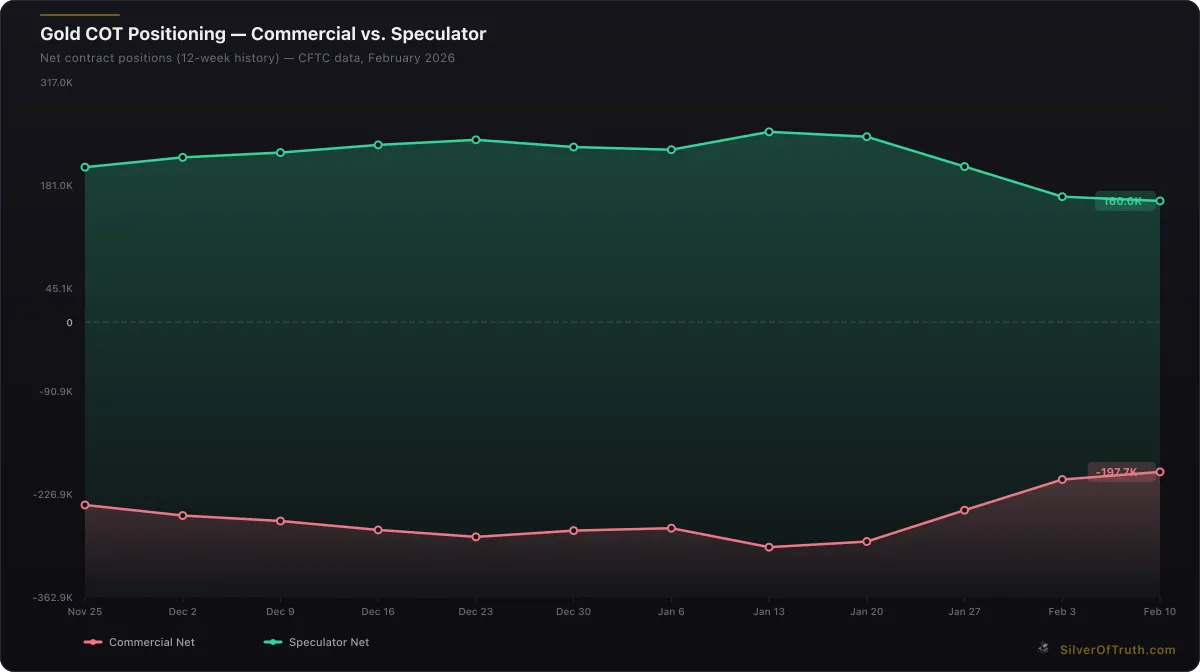
Gold COT positioning: commercial hedgers (red) vs. speculators (green). Source: CFTC via SilverOfTruth, February 2026
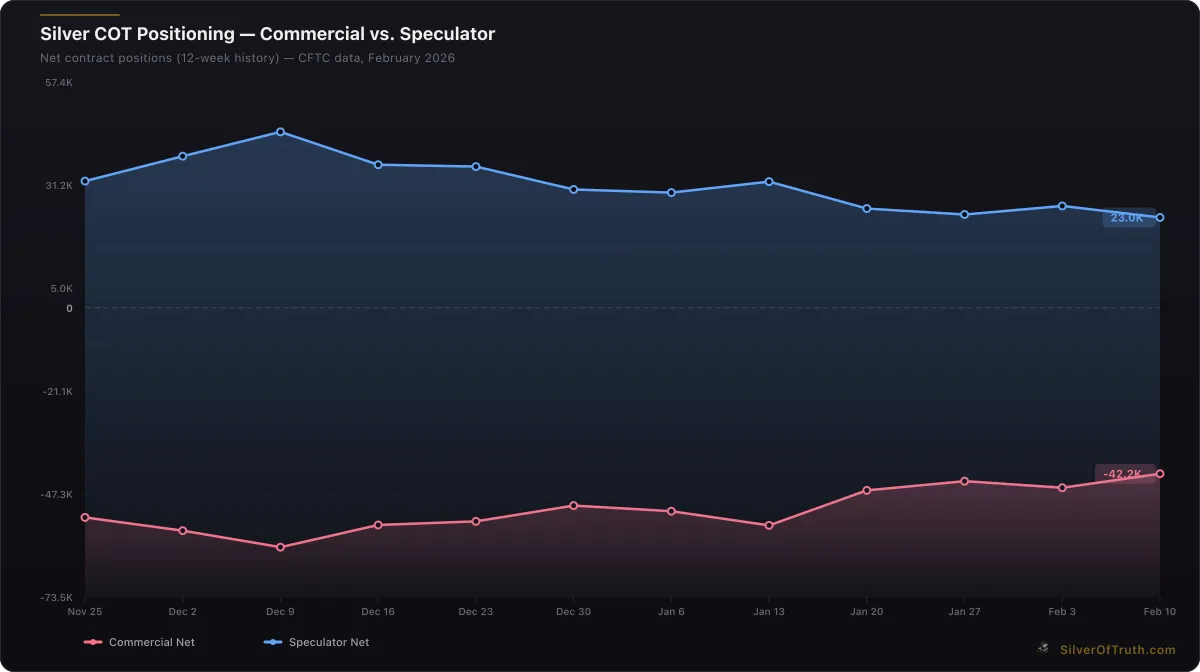
Silver COT positioning: commercial hedgers (red) vs. speculators (blue). Source: CFTC via SilverOfTruth, February 2026
Current COMEX silver inventory of 376.4 million ounces provides limited buffer against expanding industrial applications, with registered stocks of 92.9 million ounces representing less than four months of global electronics consumption. This supply-demand imbalance suggests continued price volatility and potential upside surprises as industrial buyers compete with investment demand.
Key catalysts include accelerating 5G rollouts requiring 30-40 million additional ounces annually by 2027, electric vehicle production consuming 80-100 million ounces by 2030, and solar panel manufacturing maintaining 140+ million ounces of sustained demand. These applications create permanent silver consumption that supports long-term price stability unlike cyclical investment flows.
Investors can access this theme through physical silver, ETFs, mining stocks, and options strategies depending on risk tolerance and return objectives. Conservative allocations of 5-15% provide exposure to industrial demand trends while maintaining portfolio diversification across asset classes.
For comprehensive analysis of silver's industrial applications and supply dynamics, explore our Silver Supply Deficit guide which covers the fundamental drivers shaping precious metals markets in 2026.
Track real-time COMEX inventory levels and delivery activity with our Silver Price tracker to monitor supply constraints as industrial demand continues expanding across global electronics markets.
FAQ
Q: How much silver does each 5G base station require compared to 4G? A: 5G base stations require 3-5 times more silver than comparable 4G installations due to higher-frequency operations and increased antenna density. Each 5G cell tower typically contains 15-25 ounces of silver versus 5-8 ounces for 4G equipment.
Q: What percentage of annual silver supply goes to electronics manufacturing? A: Electronics manufacturing consumes approximately 260-280 million ounces annually, representing about 30% of total industrial silver demand and roughly 25% of global silver supply including mining and recycling sources.
Q: Can manufacturers substitute other metals for silver in electronic applications? A: Limited substitution is possible in some applications, but silver's unique combination of electrical conductivity, thermal properties, and corrosion resistance makes it irreplaceable in critical electronic systems. Cost savings from substitution often come at the expense of performance or reliability.
Q: How does COMEX inventory depletion affect industrial silver buyers? A: Falling COMEX inventory reduces available supply for industrial procurement and can drive spot premiums higher. Industrial buyers may face delivery delays or increased costs when sourcing silver through futures markets versus bilateral supply agreements.
Q: What impact does electric vehicle growth have on silver demand? A: Each electric vehicle contains 25-50 ounces of silver compared to 15-20 ounces in traditional vehicles. With global EV production reaching 14+ million units annually and growing rapidly, this creates substantial incremental silver demand estimated at 80-100 million ounces by 2030.
Sources
- CFTC Commitments of Traders Report: https://www.cftc.gov/dea/futures/other_lf.htm
- CME Group COMEX Data: https://www.cmegroup.com/markets/metals.html
- Silver Institute Industrial Demand Report: https://www.silverinstitute.org
- World Gold Council Market Intelligence: https://www.gold.org/goldhub/data
- U.S. Bureau of Labor Statistics CPI Data: https://www.bls.gov/cpi/
Disclaimer: This article is for informational and educational purposes only and does not constitute financial, investment, or trading advice. Past performance is not indicative of future results. Always conduct your own research and consult with a qualified financial advisor before making investment decisions. SilverOfTruth provides market data and analysis tools — it does not provide personalized financial advice.