


Silver stacking tips aren't just theoretical advice—they're hard-won lessons from investors who've built substantial precious metals portfolios over decades. With silver trading at $77.27 per ounce and COMEX registered inventory showing signs of depletion at 92.9 million ounces, experienced stackers are sharing their most valuable insights for newcomers entering this market.
Whether you're starting with $100 or $10,000, these 15 silver stacking tips from seasoned investors will help you avoid costly mistakes, optimize your purchasing strategy, and build a robust physical silver position that stands the test of time.
Dollar-Cost Averaging Mastery
Tip #1: Implement Systematic Purchasing Schedules
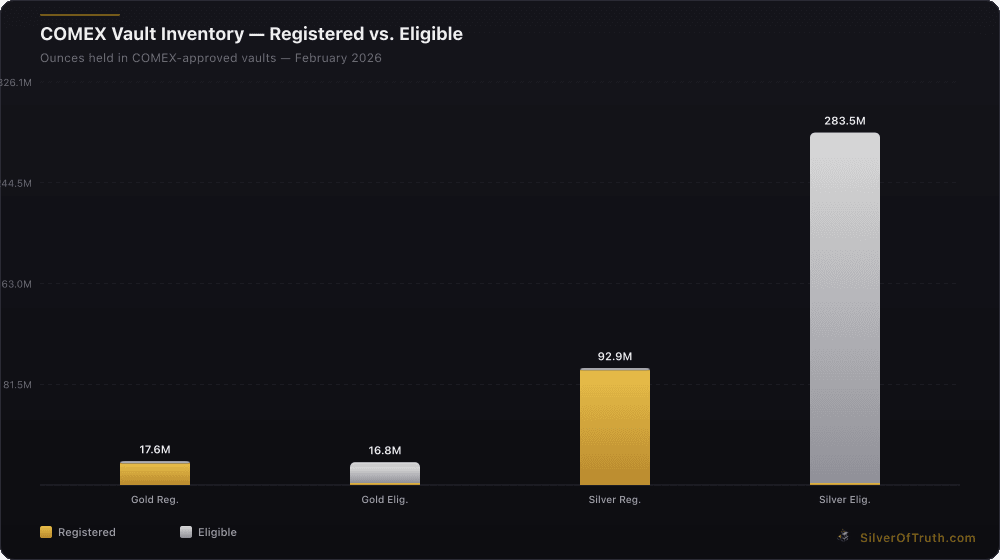
Source: SilverOfTruth COMEX data, February 2026
Experienced stackers swear by dollar-cost averaging (DCA), but with a precious metals twist. Rather than buying on fixed dates, successful stackers buy on predetermined price dips. "I set buy triggers at 5% and 10% pullbacks from recent highs," explains one veteran stacker with over 2,000 ounces. "This way, I'm buying weakness instead of random dates."
The strategy works because silver prices exhibit high volatility—often moving 3-5% in a single session. With silver's current 24-hour change of +2.09%, waiting for pullbacks can significantly improve your average cost basis over time.
Tip #2: The "Third Down" Rule
Many experienced stackers follow the "third down" purchasing rule. After silver drops for three consecutive sessions, they increase their normal purchase size by 50%. "Markets rarely fall straight down," notes a long-time precious metals dealer. "By the third red day, you're often catching oversold conditions before the bounce."
This approach requires patience and discipline, especially during extended bear markets, but historical data shows silver rarely falls more than four consecutive sessions without at least a minor rebound.
Product Selection Strategies
Tip #3: The 80/20 Bullion Rule
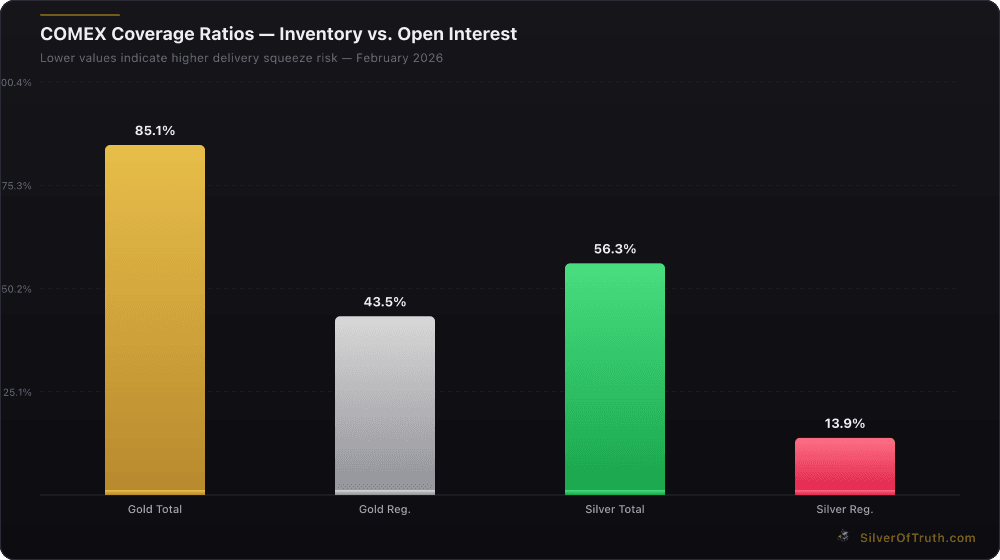
COMEX coverage ratios — lower values indicate higher delivery squeeze risk. Source: SilverOfTruth, February 2026
Veteran stackers typically allocate 80% of their silver purchases to pure bullion products (rounds, bars, government coins) and reserve 20% for numismatics or specialty items. This balance optimizes liquidity while allowing for potential collector premiums.
"Your stack should be built on a foundation of recognizable, liquid products," advises one stacker with 15 years of experience. Government silver coins like American Silver Eagles, Canadian Maple Leafs, or Mexican Libertads offer the best combination of recognition and liquidity.
Tip #4: Size Diversification Strategy
Smart stackers diversify by product size to optimize for different selling scenarios. A typical allocation might include:
| Product Type | Percentage | Purpose | |---|---|---| | 1 oz coins | 40% | Maximum liquidity, small transactions | | 10 oz bars | 30% | Lower premiums, medium transactions | | 100 oz bars | 20% | Lowest premiums, storage efficiency | | Fractional silver | 10% | Small change, barter scenarios |
This diversification ensures you can sell appropriate quantities for any situation without breaking larger bars or paying excessive premiums on small transactions.
Tip #5: Avoid High-Premium Traps
One of the biggest mistakes new stackers make is chasing high-premium products. Experienced stackers focus on silver premium over spot pricing and typically avoid anything with premiums exceeding 15% over spot unless there's a compelling numismatic case.
"I see new stackers paying $10-15 over spot for 'collectible' rounds that will never carry those premiums when they sell," warns a precious metals forum moderator. "Stick to recognizable government coins or low-premium rounds from established mints."
Advanced Purchasing Techniques
Tip #6: The Ratio Trading Opportunity
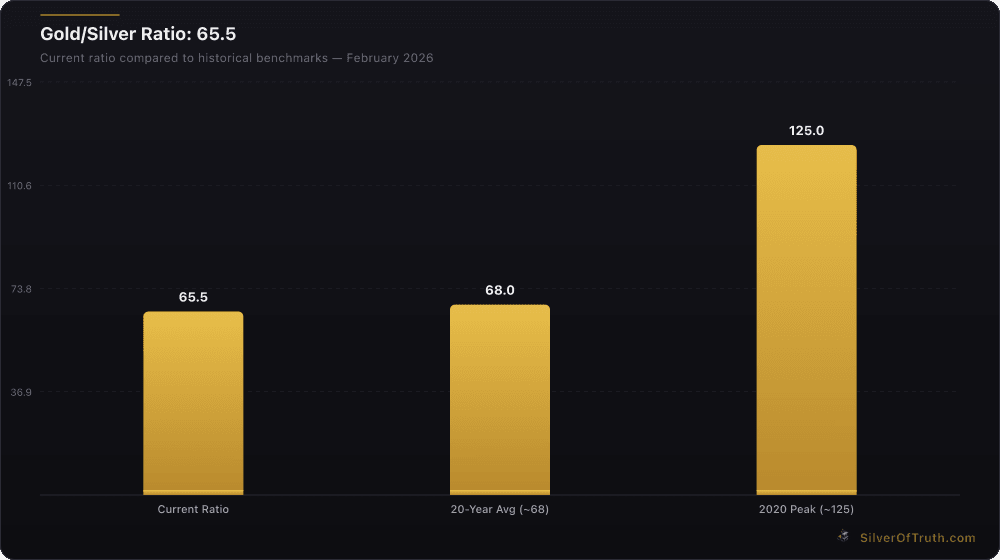
Gold/Silver Ratio at 65.5 — below the 20-year average suggests silver may be undervalued. Source: SilverOfTruth, February 2026
With the current gold/silver ratio at 65.53, experienced stackers are employing ratio trading strategies. When the ratio exceeds 70, many switch from gold to silver purchases, and vice versa when it drops below 50.
"I've been tracking the ratio for 20 years," explains one veteran trader. "Above 75, I sell some gold and buy silver. Below 50, I do the opposite. It's a simple but effective way to optimize your precious metals allocation."
Tip #7: Seasonal Purchasing Patterns
Experienced stackers have identified seasonal patterns in silver pricing and dealer premiums. January-February typically offers the lowest premiums as dealers clear year-end inventory, while November-December sees premium expansion due to gift-giving demand.
Physical demand from industrial users also creates patterns—Q4 inventory building often supports prices, while Q2 typically sees softer demand. Successful stackers plan their largest purchases during traditionally weak demand periods.
Tip #8: Dealer Relationship Building
Long-term stackers emphasize building relationships with reputable dealers rather than always chasing the lowest price online. "My local coin shop gives me first call on estate collections and charges me lower premiums because I'm a consistent buyer," notes one stacker with over 10 years of experience.
These relationships prove invaluable during market stress when products become scarce. During the 2020 silver shortage, established customers often received priority allocation while new buyers faced weeks-long delays.
Storage and Security Mastery
Tip #9: The Geographic Diversification Rule
Experienced stackers never store all their silver in one location. A common strategy divides holdings into three locations: 40% at home in a quality safe, 40% in a local bank safety deposit box, and 20% at a specialized precious metals depository.
"I learned this lesson during Hurricane Katrina," explains a Gulf Coast stacker. "Having all your silver in one location, even a great safe, creates single-point-of-failure risk."
For those interested in understanding the broader storage infrastructure, our guide to COMEX inventory explains how institutional silver storage works, providing insights into professional-grade security practices.
Tip #10: Documentation and Photography
Every experienced stacker maintains detailed records with photographs of each purchase. This documentation serves multiple purposes: insurance claims, estate planning, and tax record-keeping.
"I photograph every order when it arrives, including serial numbers on bars," explains one meticulous stacker. "It takes five minutes but could save thousands in insurance disputes."
Modern stackers use smartphone apps or spreadsheets to track purchase dates, prices, dealer sources, and storage locations. This data proves invaluable for calculating cost basis and optimizing future sales.
Tip #11: Test Everything You Buy
Veteran stackers test every purchase, regardless of the dealer's reputation. Basic testing includes:
- Magnet test: Silver is not magnetic, but many fakes are
- Weight verification: Precision scales should match stated weights exactly
- Dimension measurement: Authentic coins have precise specifications
- Ping test: Silver produces a distinctive ring when dropped
More advanced stackers invest in electronic precious metals testers or specific gravity test kits, especially for larger bars or estate purchases.
Market Timing and Psychology
Tip #12: Contrarian Purchasing Indicators
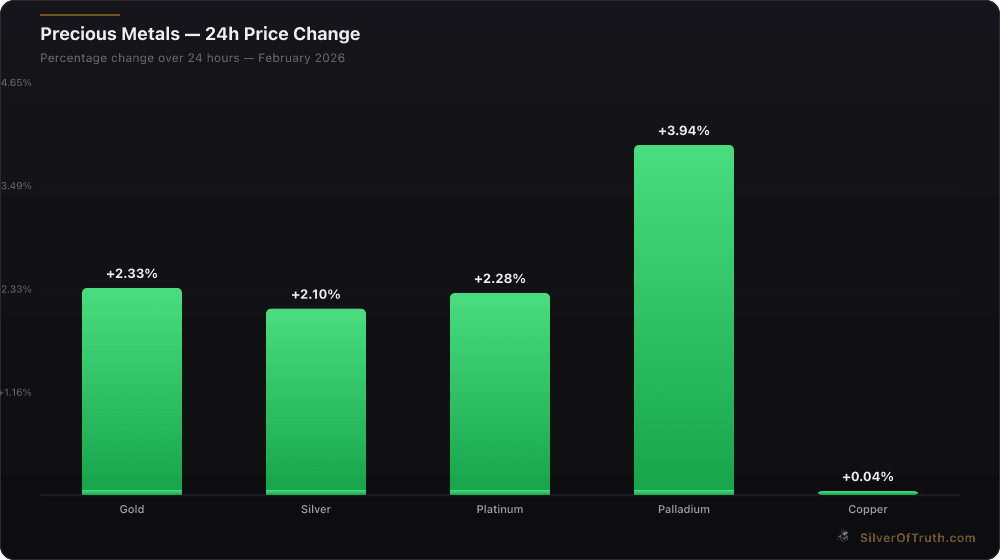
24-hour precious metals price changes. Source: SilverOfTruth, February 2026
Experienced stackers buy when sentiment is most negative and avoid purchasing during euphoric periods. Key contrarian indicators include:
- Negative precious metals headlines in mainstream media
- Low coin shop foot traffic
- Reduced dealer premiums
- Pessimistic stacking forum discussions
"The best time to buy is when your non-stacker friends think you're crazy," observes one long-time investor. "When everyone wants silver, that's when I slow my purchasing."
Tip #13: Ignore Short-Term Price Movements
Successful stackers focus on ounce accumulation rather than dollar value fluctuations. With silver's inherent volatility—currently showing a $5.52 daily trading range—fixating on short-term price movements leads to poor decision-making.
"I stopped checking silver prices daily years ago," admits one veteran stacker. "I focus on accumulating ounces consistently and let the long-term trend work in my favor."
This mindset prevents emotional buying at tops and selling at bottoms, two behaviors that destroy long-term wealth accumulation.
Advanced Portfolio Strategies
Tip #14: The Insurance Allocation Model
Many experienced stackers view silver as portfolio insurance rather than a growth investment. They allocate 5-10% of total investable assets to physical precious metals, treating it as insurance against currency debasement, financial system stress, or economic collapse.
"Silver isn't my retirement plan—it's my insurance policy," explains one veteran. "It's the portion of my wealth I never want to lose, even if it never makes me rich."
This perspective helps maintain discipline during both bull and bear markets, preventing over-allocation during exciting periods or panic selling during downturns.
Understanding the broader precious metals market context, including physical vs paper silver dynamics, helps stackers make informed allocation decisions.
Tip #15: Exit Strategy Planning
Experienced stackers plan their exit strategies before they need them. This includes:
- Identifying liquid products: Which pieces sell easily and quickly
- Knowing local dealers: Who offers fair prices with minimal hassle
- Understanding tax implications: How precious metals sales are taxed
- Emergency liquidity needs: Which portions might be sold first
"I hope I never have to sell, but I know exactly which coins I'd liquidate first and where I'd sell them," explains one prudent stacker. This planning prevents panic decisions during financial emergencies.
Building Your Stacking Foundation
These 15 silver stacking tips represent decades of combined experience from successful precious metals investors. The key themes—systematic purchasing, product diversification, secure storage, and long-term thinking—form the foundation of effective silver accumulation strategies.
For newcomers, start with our silver stacking for beginners guide to understand the basics, then explore how to start silver stacking with $100 for practical implementation strategies.
Remember that silver stacking is a marathon, not a sprint. With COMEX registered inventory at concerning levels and industrial demand continuing to grow, building a physical silver position using these proven strategies positions you well for whatever economic challenges lie ahead.
Track live COMEX inventory data, silver premiums, and market analysis with the SilverOfTruth app—available on the App Store.
Frequently Asked Questions
How much silver should I buy each month?
Most experienced stackers recommend starting with 1-5% of monthly income until you reach your target allocation (typically 5-10% of total investable assets). The key is consistency rather than large sporadic purchases, allowing you to benefit from dollar-cost averaging over time.
What's the best silver product for beginners?
American Silver Eagles or Canadian Maple Leafs offer the best combination of liquidity, recognition, and reasonable premiums for new stackers. These government-minted coins are accepted worldwide and maintain consistent premiums in both buying and selling markets.
Should I buy silver during price run-ups?
Experienced stackers reduce purchasing during sharp price increases and increase buying during pullbacks. With silver's high volatility, patience often rewards stackers with better entry points. Consider waiting for 3-5% corrections before making larger purchases.
How do I know if I'm paying too much premium?
Compare prices across multiple dealers and focus on products with premiums under 15% over spot price. Government coins typically carry 6-12% premiums, while generic rounds should be closer to 4-8%. Avoid products with premiums exceeding 20% unless there's legitimate numismatic value.
What's the biggest mistake new silver stackers make?
The most common error is buying high-premium specialty products instead of building a foundation of liquid, recognizable bullion. New stackers often chase "rare" or "limited edition" pieces that carry premium prices but lose value when sold. Focus on standard bullion products first, then explore collectibles with extra funds.
Disclaimer: This article is for informational and educational purposes only and does not constitute financial, investment, or trading advice. Past performance is not indicative of future results. Always conduct your own research and consult with a qualified financial advisor before making investment decisions. SilverOfTruth provides market data and analysis tools — it does not provide personalized financial advice.