


At $77.27 per ounce with the gold/silver ratio at 65.53, silver stackers face a critical question: should you dollar-cost average (DCA) into silver consistently, or time your purchases based on ratio signals and market conditions? This comprehensive guide explores both silver stacking strategies, helping you determine which approach—or combination—fits your investment goals and risk tolerance.
Silver stacking strategy isn't one-size-fits-all. While DCA advocates emphasize consistent accumulation regardless of price, ratio traders seek optimal entry points by analyzing the gold/silver ratio, COMEX inventory levels, and positioning data. With COMEX silver showing a high-risk 56.3% coverage ratio and commercial positioning at neutral levels according to recent CFTC COT reports, understanding these approaches becomes crucial for maximizing your physical silver accumulation.
Understanding Silver Stacking Fundamentals
Silver stacking represents the systematic accumulation of physical silver coins, bars, and rounds as a long-term wealth preservation strategy. Unlike trading paper silver instruments, stacking focuses on building tangible assets that provide portfolio diversification, inflation protection, and insurance against currency debasement.
Successful silver stacking requires understanding several key components. First, recognize that physical silver carries premiums above spot price—currently ranging from 8-15% for popular products like American Silver Eagles and generic rounds. Second, storage and insurance considerations become paramount as your stack grows beyond home safe capacity. Third, liquidity planning ensures you can convert portions of your stack back to cash when needed without significant price penalties.
The foundation of any silver stacking strategy rests on clear objectives. Are you preserving wealth against inflation, speculating on silver's industrial demand growth, or building generational wealth? Your goals determine whether aggressive accumulation during price dips makes sense, or if steady, methodical purchasing better serves your needs. As outlined in our guide to starting silver stacking with $100, beginners should establish these fundamentals before diving into advanced timing strategies.
Market structure also influences stacking decisions. Current COMEX data shows 376.4 million ounces in total inventory with only 92.9 million ounces in registered (deliverable) status. This 56.3% coverage ratio against open interest suggests potential supply constraints that could drive premiums higher, making accumulation timing more critical than in periods of abundant supply.
Dollar-Cost Averaging (DCA) Silver Strategy
Dollar-cost averaging represents the systematic purchase of silver at regular intervals regardless of price fluctuations. This approach prioritizes consistency over timing, allowing stackers to build positions gradually while smoothing out market volatility. With silver's 24-hour trading resulting in significant price swings—currently showing a $5.52 daily range between $73.75 and $79.27—DCA helps eliminate the stress and guesswork of market timing.
The mathematical advantage of DCA emerges through automatic rebalancing. When silver prices drop, your fixed dollar amount purchases more ounces; when prices rise, you acquire fewer ounces but benefit from previous lower-cost purchases. Over extended periods, this creates an average cost basis typically lower than attempting to time market bottoms. Research from precious metals dealers indicates DCA investors often achieve 15-20% better average prices compared to sporadic buyers trying to catch falling knives.
Implementing DCA requires establishing a sustainable purchase frequency and amount. Weekly purchases of $100-500 work well for most stackers, providing regular exposure without overwhelming cash flow. Monthly allocations of $1,000-5,000 suit higher-income investors seeking substantial accumulation. The key lies in consistency—maintaining purchases during both bull and bear phases. Our silver stacking for beginners guide provides specific DCA frameworks for different budget levels.
DCA particularly excels during volatile markets where timing becomes nearly impossible. Silver's correlation with economic uncertainty means prices can surge 20-30% on geopolitical events or contract 15-25% on Federal Reserve policy shifts. Rather than attempting to predict these moves, DCA captures them automatically through varied purchase volumes. Current market conditions with elevated real interest rates and mixed precious metals sentiment make this approach especially relevant.
However, DCA isn't without drawbacks. During extended bull markets, consistent buying at higher prices reduces overall portfolio returns compared to front-loading purchases at lower levels. Additionally, premium compression during market stress can make DCA less efficient when dealer margins widen significantly. Understanding these limitations helps stackers complement DCA with tactical adjustments when opportunities arise.
Gold/Silver Ratio Trading Strategy
The gold/silver ratio trading strategy leverages the historical relationship between gold and silver prices to optimize accumulation timing. Currently at 65.53, this ratio sits above the long-term average of approximately 60, suggesting silver may be undervalued relative to gold. Ratio traders use these deviations to time silver purchases when the metal offers superior value propositions.
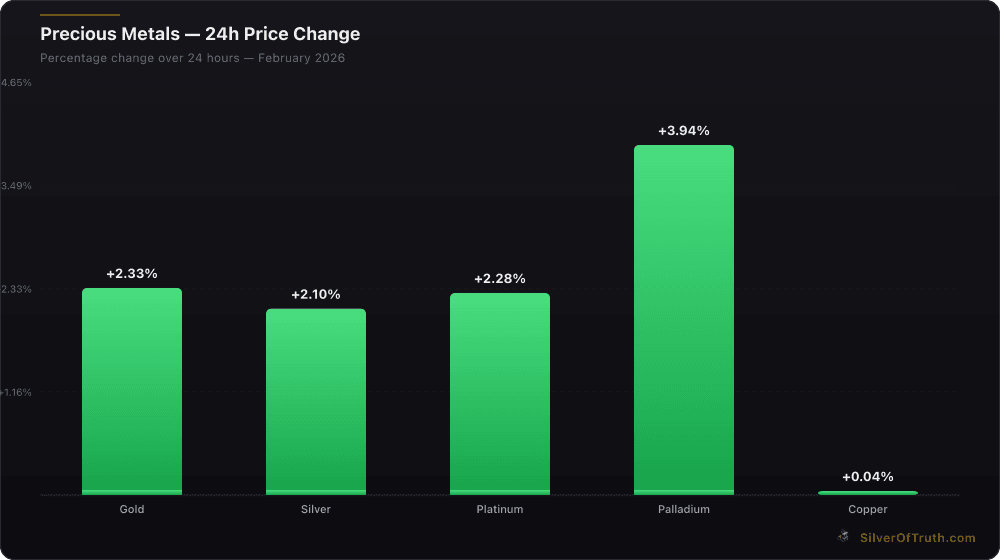
24-hour precious metals price changes. Source: SilverOfTruth, February 2026
Historical analysis reveals the ratio typically oscillates between 40-80 over multi-year cycles. Readings below 50 often coincide with silver's industrial demand peaks or monetary debasement fears, while ratios above 75 frequently mark economic recession periods when gold's safe-haven premium expands. The current 65.53 level falls in the middle-high range, indicating modest silver undervaluation but not extreme dislocation warranting aggressive accumulation.
Implementing ratio-based stacking requires establishing trigger levels for increased purchases. Conservative approaches might increase silver allocation by 50% when ratios exceed 70 and double purchases above 80. Aggressive strategies could shift from 50/50 gold-silver splits to 80% silver when ratios reach 75+. Our comprehensive gold/silver ratio explained guide details specific threshold strategies for different risk tolerances.
The strategy's effectiveness depends on understanding ratio drivers beyond simple mean reversion. Industrial silver demand fluctuations, mining supply disruptions, and monetary policy divergences can sustain elevated ratios longer than expected. Currently, silver's industrial applications in solar panels, electronics, and medical devices provide fundamental support, while gold benefits from central bank buying and safe-haven flows during geopolitical tensions.
Practical implementation requires patience and discipline. Ratio trading often means reducing silver purchases during exciting bull runs when ratios compress, and increasing allocations during pessimistic periods when ratios expand. This contrarian approach challenges emotional investing tendencies but historically produces superior accumulation results. Combining ratio signals with technical analysis and fundamental factors creates robust entry frameworks.
Risk management becomes crucial when ratio trading guides major allocation shifts. Extreme ratio readings can persist longer than anticipated, potentially missing extended moves in either direction. Successful ratio traders typically allocate 60-70% of their precious metals budget to core DCA strategies, reserving 30-40% for opportunistic ratio-based purchases.
Hybrid Approach: Combining DCA and Ratio Trading
The most sophisticated silver stacking strategy combines dollar-cost averaging's consistency with ratio trading's tactical advantages. This hybrid approach establishes a base DCA program while maintaining flexibility to increase purchases during favorable ratio readings or market dislocations. Current market conditions with elevated COMEX coverage risks and neutral COT positioning make this balanced strategy particularly attractive.
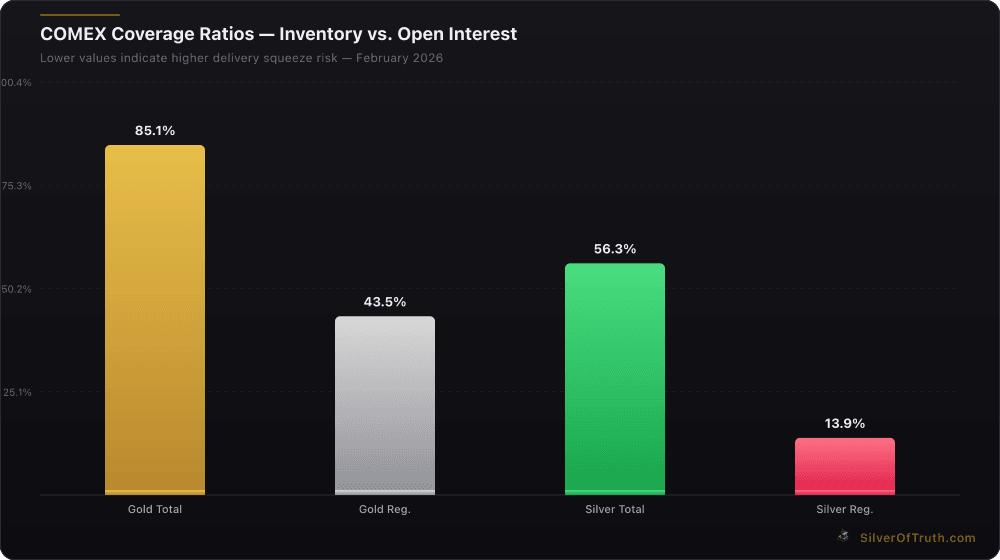
COMEX coverage ratios — lower values indicate higher delivery squeeze risk. Source: SilverOfTruth, February 2026
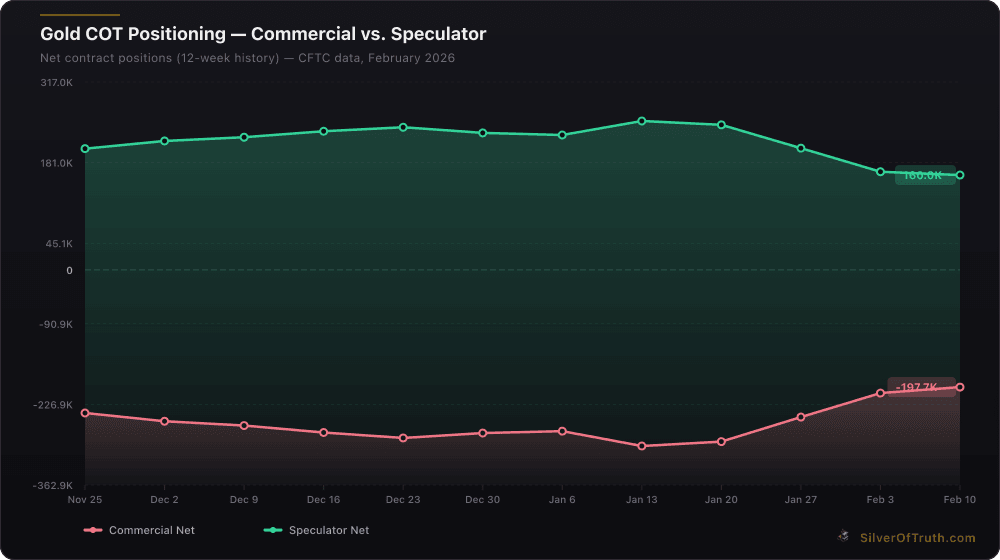
Gold COT positioning: commercial hedgers (red) vs. speculators (green). Source: CFTC via SilverOfTruth, February 2026
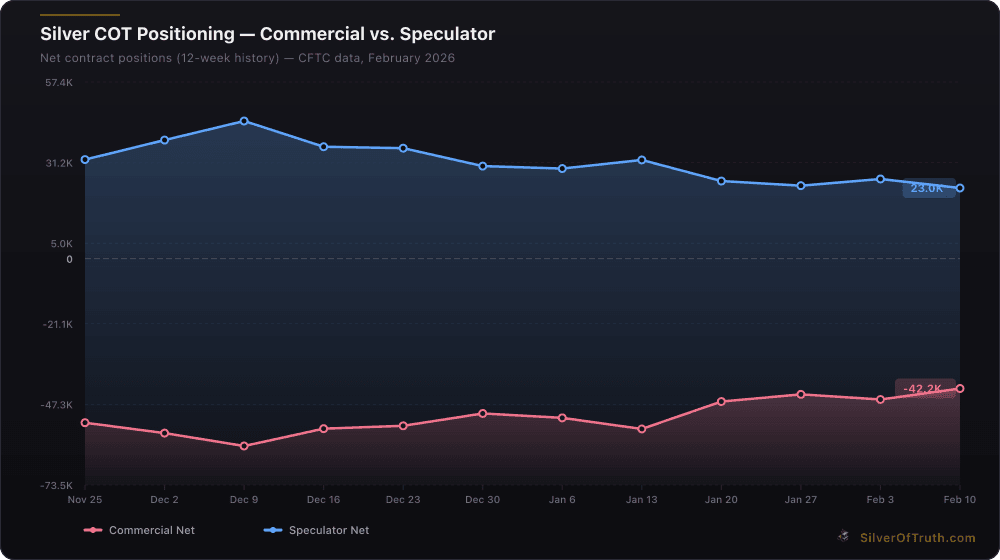
Silver COT positioning: commercial hedgers (red) vs. speculators (blue). Source: CFTC via SilverOfTruth, February 2026
A typical hybrid framework might allocate 60% of monthly precious metals budget to consistent silver DCA, with 40% held in cash reserves for opportunistic purchases. When the gold/silver ratio exceeds 70 or COMEX inventory coverage drops below 50%, deploy reserve funds for accelerated silver accumulation. Conversely, when ratios compress below 55, redirect some silver budget toward gold or build larger cash reserves for future opportunities.
Implementation requires establishing clear trigger mechanisms and maintaining discipline during both directions. Write down your criteria before emotional market periods cloud judgment. For example: "Increase silver purchases by 50% when gold/silver ratio exceeds 68 AND COMEX registered coverage falls below 45%" or "Pause additional silver purchases when ratio drops below 52 for two consecutive weeks."
The hybrid approach particularly excels during market transitions. While pure DCA continues regardless of conditions, and pure ratio trading might miss entire cycles waiting for ideal entries, the hybrid captures both steady accumulation and tactical opportunities. Recent market volatility with silver ranging from $73-79 in a single day demonstrates how consistent base buying combined with opportunistic adds creates superior long-term results.
Technology enhances hybrid strategy execution. Price alert systems can notify you when ratios hit predetermined levels, while automated purchasing through precious metals IRAs or dealers' subscription services handles base DCA components. Tools like those available in the SilverOfTruth app provide real-time ratio tracking and COMEX inventory monitoring essential for tactical timing decisions.
Portfolio allocation within hybrid strategies requires balancing growth potential with risk management. Younger investors might emphasize silver accumulation through ratio opportunities given the metal's leverage to industrial demand growth. Conservative stackers may prefer gold-heavy base positions with silver ratio trades representing portfolio satellite positions rather than core holdings.
Market Timing Indicators for Silver Stackers
Effective silver stacking extends beyond simple DCA or ratio signals to encompass broader market timing indicators that influence precious metals cycles. Understanding these factors helps stackers optimize their chosen strategy regardless of whether they emphasize consistency or tactical timing. Current market conditions provide excellent examples of how multiple indicators interact to create accumulation opportunities.
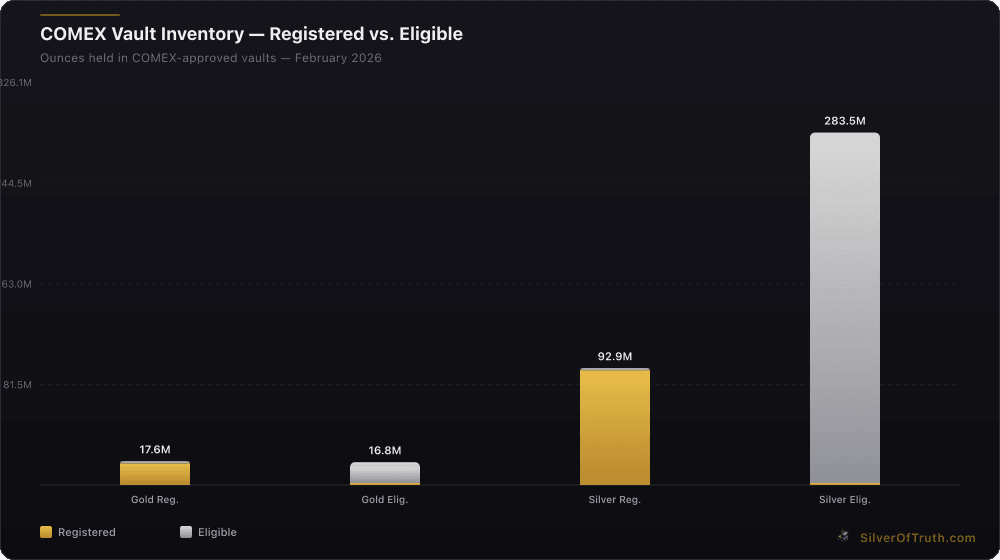
Source: SilverOfTruth COMEX data, February 2026
COMEX inventory trends represent perhaps the most reliable silver timing indicator. The current 376.4 million total ounces with only 92.9 million registered creates a 56.3% coverage ratio against open interest—elevated risk territory according to CME Group data. Historical analysis shows coverage ratios below 60% often precede supply squeezes that drive both spot prices and premiums higher. Stackers benefit from monitoring these levels through our detailed COMEX inventory analysis.
Commitment of Traders (COT) positioning provides sentiment insights crucial for timing decisions. Current silver data shows commercials net short 42,163 contracts while speculators hold net long positions of 22,955 contracts—neutral positioning that suggests balanced supply-demand expectations. Extreme readings in either direction often mark turning points: excessive speculator longs indicate potential distribution phases, while extreme commercial short covering suggests supply concerns. Our COT report guide explains how to interpret these positioning shifts.
Premium structures across physical products signal retail demand intensity and dealer inventory levels. When American Silver Eagle premiums expand beyond $4-5 over spot, or generic round premiums exceed $2.50, supply constraints typically indicate accumulation opportunities before broader price moves. Conversely, compressed premiums below $2 for Eagles often coincide with abundant dealer inventory and potential price weakness ahead.
Federal Reserve policy cycles heavily influence precious metals performance through real interest rate impacts. The current environment of elevated nominal rates but uncertain inflation expectations creates complex dynamics for silver stackers. Rising real rates typically pressure precious metals, while falling real rates or negative territory often catalyze significant moves higher. Monitoring Federal Reserve communications and Treasury yield curves provides crucial context for stacking decisions.
Industrial demand indicators specific to silver include solar panel installation rates, electronics production growth, and medical technology adoption. Unlike gold's primarily monetary functions, silver's 60% industrial usage means economic growth patterns significantly influence demand. Current trends in renewable energy expansion and electronic vehicle adoption create long-term tailwinds that support accumulation strategies regardless of short-term price volatility.
Risk Management in Silver Stacking
Risk management principles apply to silver stacking just as they do to any investment strategy, though physical precious metals present unique considerations around storage, liquidity, and portfolio allocation. Proper risk management ensures your stacking strategy enhances rather than endangers your overall financial security while maximizing the probability of achieving your accumulation goals.
Position sizing represents the fundamental risk management decision for silver stackers. Conservative guidelines suggest limiting precious metals to 5-15% of total investment assets, with silver comprising 25-50% of precious metals holdings depending on your risk tolerance and objectives. Aggressive stackers might push precious metals allocations to 20-30% of assets, but rarely should physical silver exceed 10-15% of total net worth given liquidity constraints and storage complexities.
Our guide to physical versus paper silver outlines the trade-offs between accumulating physical metal versus precious metals ETFs or mining stocks. Physical silver provides the ultimate insurance against systemic risks but sacrifices liquidity and incurs storage costs. Balancing physical holdings with more liquid precious metals exposure creates flexibility for tactical adjustments and emergency liquidity needs.
Storage risk management evolves as stack sizes grow beyond home safe capacity. Bank safety deposit boxes provide security but limit access during banking hours and potential systemic crises. Private vault storage offers professional security with better access but introduces counterparty risk and ongoing fees. Geographic diversification across multiple storage locations reduces single-point-of-failure risks while complicating inventory management. Consider storage implications before stack sizes exceed comfortable home security limits.
Liquidity planning prevents forced sales during unfavorable market conditions. Maintaining 3-6 months of emergency expenses in traditional savings accounts ensures you won't need to liquidate silver holdings during temporary price weakness. Additionally, structuring your stack with different product types—readily liquid coins like American Silver Eagles alongside lower-premium bars—provides flexibility for partial liquidations without disrupting core holdings.
Market timing risks affect both DCA and ratio trading strategies differently. DCA faces the risk of consistent purchases during extended bear markets, though this risk decreases over longer time horizons as prices eventually recover. Ratio trading risks missing extended moves while waiting for ideal entry points or deploying capital too early in ratio expansion cycles. Hybrid approaches help mitigate both risks through diversified timing exposure.
Counterparty risk emerges through dealer relationships and storage providers. Purchasing from established, well-capitalized dealers reduces delivery and product authenticity risks. Diversifying purchases across multiple dealers prevents single-source dependency while enabling price comparison opportunities. Our analysis of bullion dealer comparisons helps evaluate dealer creditworthiness and pricing competitiveness.
Tax and Legal Considerations
Silver stacking involves important tax implications that vary significantly based on your jurisdiction, purchase amounts, and liquidation strategies. Understanding these considerations helps optimize your stacking approach while ensuring compliance with applicable regulations and minimizing tax burdens on eventual sales.
In the United States, physical silver purchases generally don't trigger immediate tax obligations, but sales create taxable events subject to capital gains treatment. Silver held longer than one year qualifies for long-term capital gains rates (0%, 15%, or 20% depending on income), while short-term holdings face ordinary income tax rates potentially reaching 37%. However, precious metals receive special treatment as "collectibles," subjecting long-term gains to a maximum 28% rate rather than the lower capital gains rates applied to stocks and bonds.
Reporting requirements vary based on purchase and sale amounts. Cash purchases exceeding $10,000 trigger Currency Transaction Reports, while certain sale volumes require dealer reporting to the IRS via Form 1099-B. American Silver Eagles face reporting requirements on sales of 1,000 ounces or more, while generic silver bars and rounds require reporting on sales exceeding $1,000 face value. Understanding these thresholds helps plan transactions to minimize paperwork burdens.
State and local taxes add complexity to silver stacking strategies. Some states impose sales tax on precious metals purchases below certain thresholds—typically $1,000-1,500—while others exempt precious metals entirely. Storage location can also influence tax obligations if you maintain silver in states with different tax treatments than your residence. Research your specific state's precious metals tax policies before implementing large accumulation strategies.
International considerations apply to stackers living abroad or considering foreign storage options. Many countries impose value-added taxes (VAT) on silver purchases ranging from 7-25%, significantly impacting accumulation costs. Some jurisdictions offer VAT exemptions for specific products or storage arrangements, creating opportunities for tax-efficient stacking. However, cross-border movement and reporting requirements add compliance complexity that requires professional guidance.
Estate planning implications affect long-term stacking strategies, particularly for substantial accumulations. Physical silver holdings require specific estate planning provisions for secure transfer to heirs while minimizing estate tax burdens. Unlike financial accounts with clear beneficiary designations, physical precious metals need detailed documentation of storage locations, access procedures, and valuation methods. Consider establishing precious metals trusts or family limited partnerships for large holdings.
Record keeping becomes crucial for tax compliance and heir transition planning. Maintain detailed purchase records including dates, dealers, products, weights, purities, and costs paid including premiums and shipping. Photograph major purchases and store documentation separately from physical holdings. Digital record systems with cloud backup ensure documentation survives alongside physical assets. Our stacking milestones guide provides frameworks for organizing and tracking accumulation progress.
FAQ
What's the ideal allocation between gold and silver in a precious metals portfolio?
Most precious metals advisors recommend 60-70% gold and 30-40% silver for conservative portfolios, given gold's superior liquidity and lower volatility. However, silver's industrial demand and potential for higher percentage gains during bull markets make 50/50 splits attractive for growth-oriented stackers. The current gold/silver ratio at 65.53 suggests modest silver undervaluation, potentially supporting higher silver allocations temporarily.
How much silver should I buy monthly using DCA strategy?
DCA amounts should align with your budget and risk tolerance without compromising essential expenses or emergency funds. Beginners might start with $100-300 monthly, while experienced stackers with higher incomes could allocate $1,000-5,000 monthly. The key is consistency—choose an amount you can maintain regardless of market conditions or personal financial changes. Scale purchases as income grows rather than starting unsustainably high.
When should I stop dollar-cost averaging and switch to ratio trading?
Consider transitioning when you've accumulated substantial core holdings—typically 50-100 ounces minimum—and developed strong understanding of ratio dynamics and market cycles. Pure ratio trading requires patience during extended unfavorable periods and discipline to buy during pessimistic market conditions. Most successful stackers maintain some DCA component while adding ratio-based tactical purchases rather than completely switching strategies.
How do I determine if current silver premiums justify continued stacking?
Monitor premium trends across product categories and dealer networks to identify unusual expansions that might signal supply constraints or demand surges. American Silver Eagle premiums consistently above $5 over spot or generic rounds exceeding $3 premiums often indicate dealer inventory stress. However, premiums naturally fluctuate with market volatility, mint production, and seasonal demand patterns. Focus on relative premium changes rather than absolute levels.
Should I focus on silver coins or bars for long-term stacking?
Both serve important portfolio functions with different trade-offs. Silver coins like American Silver Eagles offer superior liquidity, recognition, and smaller denomination flexibility but carry higher premiums and storage requirements per ounce. Silver bars provide lower premiums and efficient storage but may face recognition challenges during sales. A balanced approach might emphasize coins for initial accumulation and emergency liquidity while adding bars for cost-effective bulk accumulation as holdings grow.
Building an effective silver stacking strategy requires balancing consistency with opportunism, understanding your risk tolerance, and maintaining discipline during both favorable and challenging market periods. Whether you choose dollar-cost averaging for its simplicity, ratio trading for tactical advantages, or a hybrid approach combining both, success depends on sustained commitment to your chosen framework rather than constantly switching strategies based on short-term market movements.
Current market conditions with COMEX inventory stress, elevated gold/silver ratios, and neutral positioning data create compelling opportunities for patient stackers using any of these approaches. Track real-time ratio data and inventory levels with the SilverOfTruth app on the App Store to optimize your timing decisions within your chosen strategy framework.
Disclaimer: This article is for informational and educational purposes only and does not constitute financial, investment, or trading advice. Past performance is not indicative of future results. Always conduct your own research and consult with a qualified financial advisor before making investment decisions. SilverOfTruth provides market data and analysis tools — it does not provide personalized financial advice.